
A blog website is a platform where individuals, businesses or organisations publish articles and share information on topics such as technology, travel, food, education, lifestyle and business. It allows website owners to share knowledge, express ideas, provide useful information and connect with readers.
From personal blogs to company blogs, these websites can serve different purposes depending on their audience and content. A well-designed blog also makes it easier for visitors to discover articles, explore categories and find information.
In this article, we explore what a blog website is, its different types, important features, popular examples and useful blog website design ideas.
What Is a Blog Website?
A blog website is a type of website that regularly publishes articles, commonly called blog posts, in reverse chronological order, with newer posts generally appearing before older ones.
Blog content can include written articles, photographs, videos, tutorials, reviews, opinions and other informative material.
For example:
-
- A travel blogger can share destination guides and travel experiences.
- A food blogger can publish recipes and cooking tips.
- A technology company can share product updates and industry insights.
- A gardening website can publish plant care tips and growing guides.
- A business consultant can share professional advice and case studies.
What Are the Different Types of Blog Websites?
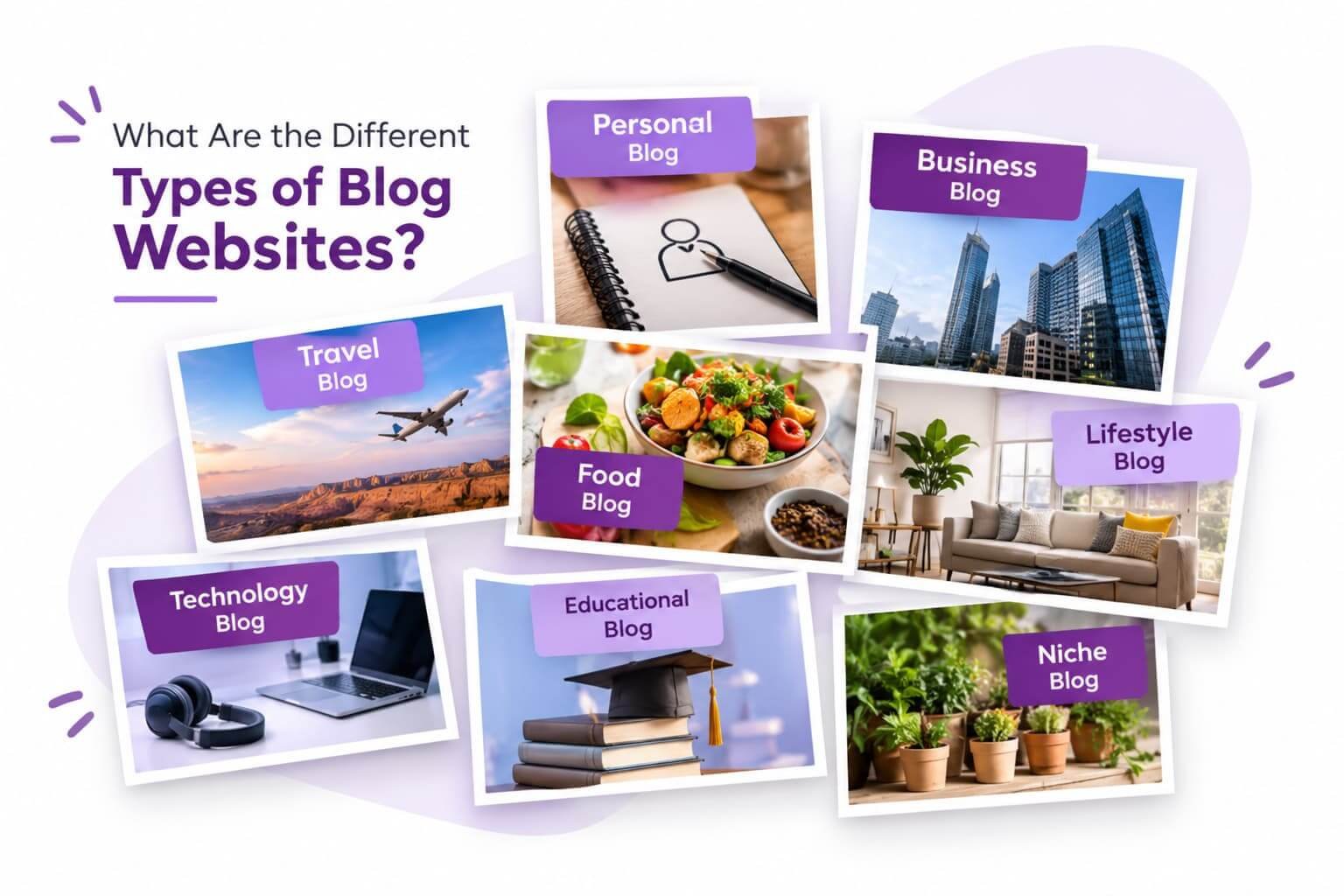
Blog websites can be created for different audiences and purposes. The content, layout and features depend on the subject being covered.
1. Personal Blog
A personal blog is created by an individual to share experiences, opinions, interests and everyday activities. It usually reflects the writer's personality and preferred topics.
Common topics:
-
- Personal experiences and stories.
- Lifestyle and hobbies.
- Travel experiences.
- Personal learning and opinions.
- Daily activities and interests.
2. Business Blog
A business blog is part of a company's website and is used to share useful information related to its products, services and industry.
Common topics:
-
- Industry updates and insights.
- Product information and announcements.
- How-to articles and tutorials.
- Customer questions and answers.
- Business news and company updates.
For example, a website development company can publish articles about website design, WordPress development and online business growth.
3. Travel Blog
A travel blog shares information about destinations, travel experiences, accommodation, local attractions and trip planning.
Common topics:
-
- Destination guides.
- Travel itineraries.
- Budget travel tips.
- Hotel and accommodation reviews.
- Local food and cultural experiences.
4. Food Blog
A food blog focuses on recipes, cooking methods, ingredients, restaurant experiences and food-related information.
Common topics:
-
- Homemade recipes.
- Cooking tutorials.
- Healthy food ideas.
- Restaurant reviews.
- Kitchen tips and ingredient guides.
5. Lifestyle Blog
A lifestyle blog covers different aspects of everyday living, including personal interests, fashion, wellness, home improvement and relationships.
Common topics:
-
- Fashion and beauty.
- Home organisation.
- Gardening and home decor.
- Fitness and everyday wellness.
- Personal development.
6. Technology Blog
A technology blog publishes information about digital products, software, gadgets, technology developments and industry trends.
Common topics:
-
- Software and application reviews.
- Smartphone and gadget information.
- Technology news.
- Website development tutorials.
- Digital tools and product comparisons.
7. Educational Blog
An educational blog shares learning resources, explanations, study materials and practical knowledge for students, teachers and other learners.
Common topics:
-
- Subject-based learning articles.
- Study tips and tutorials.
- Career guidance.
- Learning resources.
- Educational updates and explanations.
8. Niche Blog
A niche blog focuses on a specific subject or area of interest rather than covering many unrelated topics.
Examples:
-
- Indoor gardening.
- Organic farming.
- WordPress website development.
- Personal finance education.
- Photography techniques.
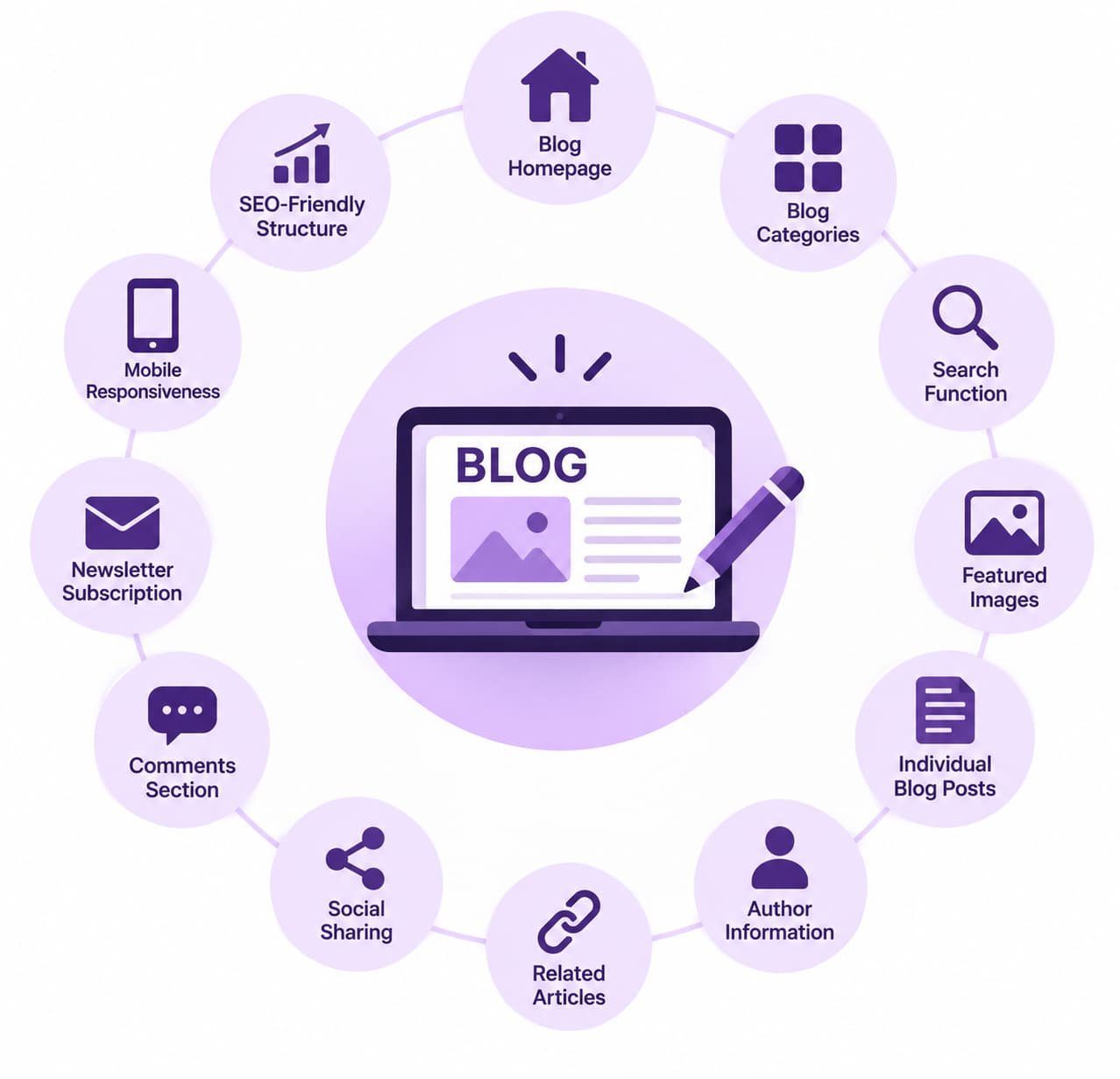
What Are the Important Features of a Blog Website?
Popular Blog Website Examples
1. Mrs. Happy Homemaker – A lifestyle blog featuring recipes, home tips and everyday ideas.
2. Nomadic Matt – A travel blog with destination guides and budget travel tips.
3. TechRadar – A technology blog featuring product reviews, news and buying guides.
4. NerdWallet – A finance blog offering money advice, financial guides and product comparisons.
5. Smashing Magazine – A design and development blog sharing tutorials and industry insights.
What to learn from these examples:
How articles are organised into categories.
How images and headings improve readability.
How navigation helps visitors find content.
Creative Blog Website Design Ideas
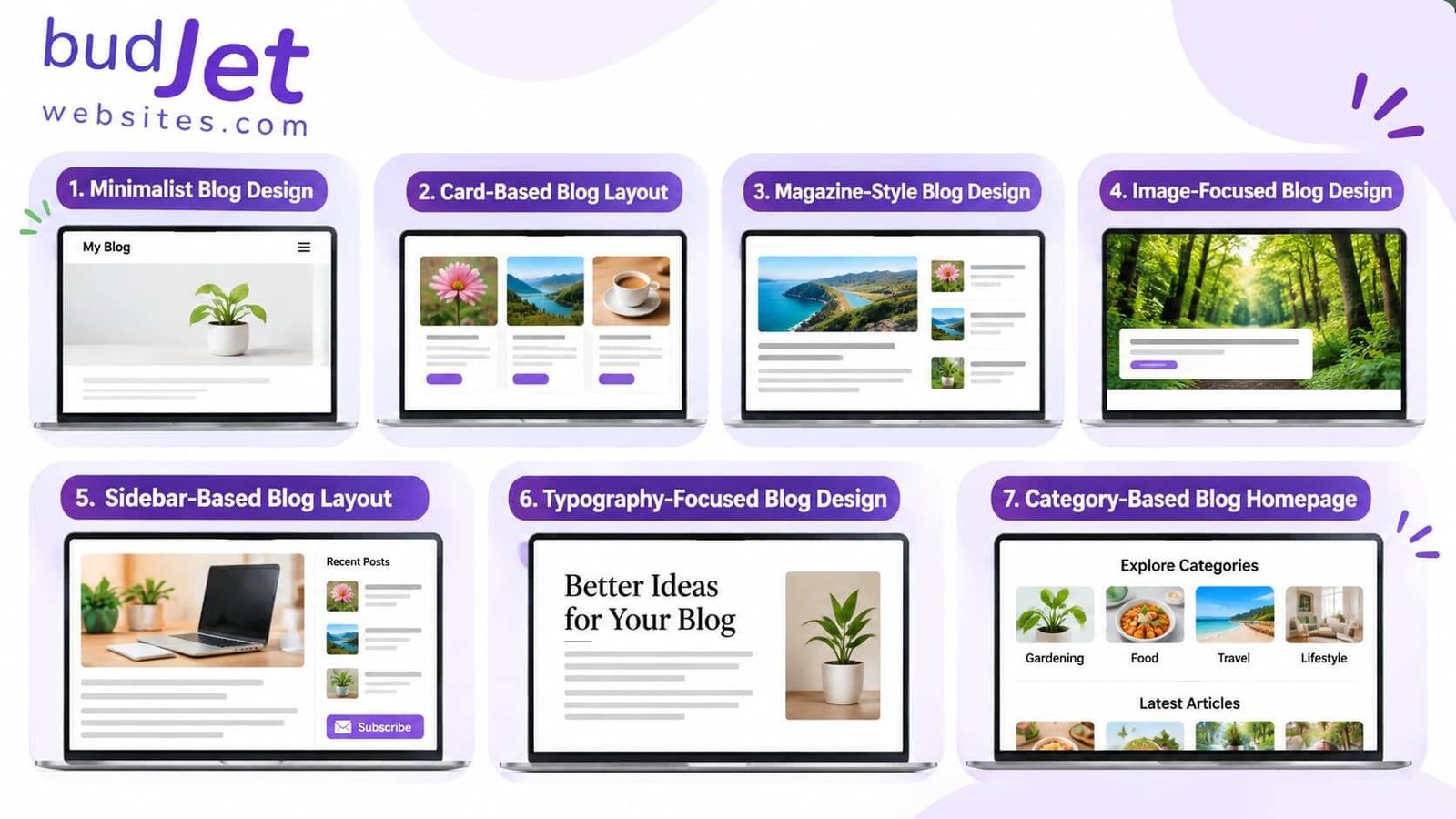
Here are some useful blog website design ideas:
1. Minimalist Blog Design
Use a simple layout with a clean background, readable typography and sufficient white space.
Keep unnecessary graphics and decorative elements to a minimum so readers can focus on the articles.
2. Card-Based Blog Layout
Display blog posts in cards with featured images, titles, short descriptions and publication dates. This layout helps visitors browse multiple articles quickly.
3. Magazine-Style Blog Design
Use a structured editorial layout with featured articles, different content sections and category-based blocks.
It works well for websites publishing articles across several topics.
4. Image-Focused Blog Design
Use attractive featured images and large visual sections to introduce articles.
This approach is useful for travel, food, fashion, photography and lifestyle blogs.
5. Sidebar-Based Blog Layout
Include a sidebar with recent posts, popular articles, categories, author information or a newsletter subscription.
Make sure the sidebar does not overcrowd the main reading area, particularly on mobile devices.
6. Typography-Focused Blog Design
Use clear headings, readable paragraph fonts, suitable line spacing and consistent text formatting. Good typography makes long articles easier to read.
7. Category-Based Blog Homepage
Organise the homepage into sections such as latest articles, popular posts and selected categories. This helps readers discover content based on their interests.
How to Create a Blog Website
-
Choose a Blog Topic: Decide your niche and target audience.
-
Select a Domain and Hosting: Choose a memorable domain name and reliable hosting.
-
Choose a Platform: Use a platform like WordPress to build your blog.
-
Create Essential Pages: Add Home, About, Blog, Contact and Privacy Policy pages.
-
Design Your Blog: Choose a clean layout, readable fonts and simple navigation.
-
Publish Quality Content: Write useful articles with headings, images and relevant links.
-
Optimise for SEO: Add keywords, meta descriptions, clear URLs and internal links.
-
Test and Launch: Check mobile responsiveness, links, forms and loading speed before publishing.
Conclusion
A blog website is a useful way to publish information, share knowledge and build an online presence. Whether you want to create a personal blog, business blog, travel blog or niche website, choosing the right content structure and design can make it easier for visitors to explore your articles.
Explore different blog website examples and blog website design approaches to understand what works for your topic and audience. Focus on useful content, clear navigation, readable layouts and a consistent visual style.
At Budjet Websites, we build WordPress websites with professional designs, responsive layouts and content-friendly structures. If you are planning to start a blog or add a blog to your business website, get in touch to discuss your requirements.