
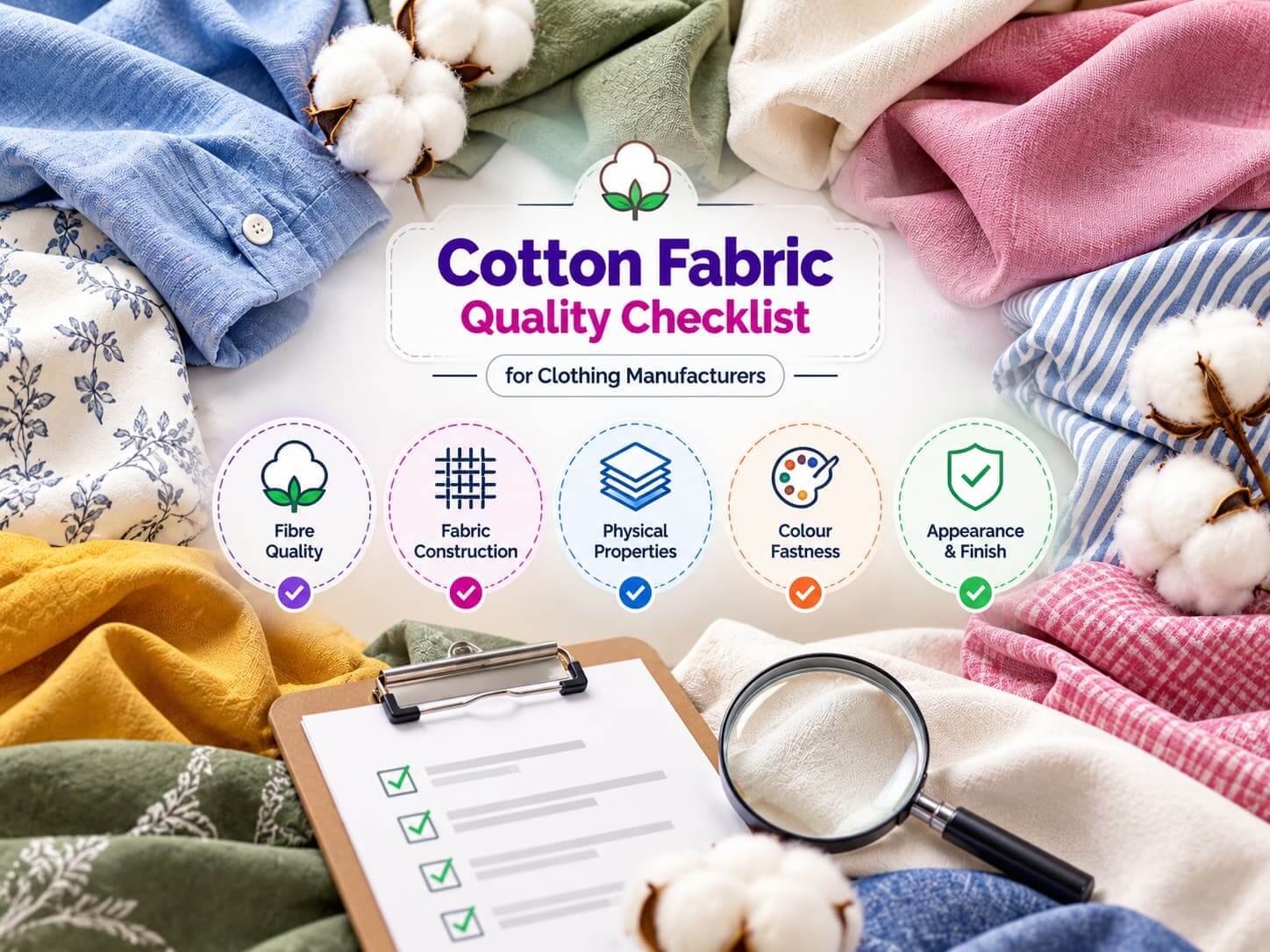
Choosing the right cotton fabric is essential for clothing manufacturers and fashion brands. Fabric quality affects garment comfort, durability, appearance, production costs and customer satisfaction.
Before placing a bulk order, manufacturers should evaluate cotton fabric quality, GSM, composition, shrinkage, colour fastness and fabric construction. A consistent quality-checking process helps reduce defects and maintain product standards.
Why Cotton Fabric Quality Matters
Good-quality cotton fabric helps manufacturers produce garments that meet customer expectations. Poor-quality material may cause shrinkage, fading, uneven textures and inconsistent sizing.
Checking fabric before production can help businesses:
- Maintain consistent garment quality
- Reduce fabric waste and production defects
- Improve comfort and durability
- Avoid unexpected shrinkage
- Control sourcing and manufacturing costs
- Build customer trust in their clothing brand
Cotton Fabric Quality Checklist

1. Check Fabric Composition
Confirm the fibre composition provided by the supplier. Fabric may contain 100% cotton or a blend of cotton and other fibres.
Check whether the composition matches your product specifications and supplier documentation.
2. Check Fabric GSM
Fabric GSM means grams per square metre. It indicates the weight of the fabric and helps manufacturers compare materials.
The appropriate GSM depends on the garment:
- T-shirts: Lightweight to medium-weight cotton jersey
- Shirts: Lightweight woven cotton fabrics
- Polo shirts: Textured cotton piqué
- Hoodies: Heavier cotton blends or suitable fleece fabrics
Higher GSM does not automatically mean better quality. Choose the weight that suits the garment design, climate and intended use.
3. Inspect Texture and Softness
Feel the fabric to assess softness, smoothness and comfort. Look for rough patches, uneven surfaces and noticeable inconsistencies.
For garments worn directly against the skin, comfort should be an important part of the evaluation.
4. Test Fabric Shrinkage
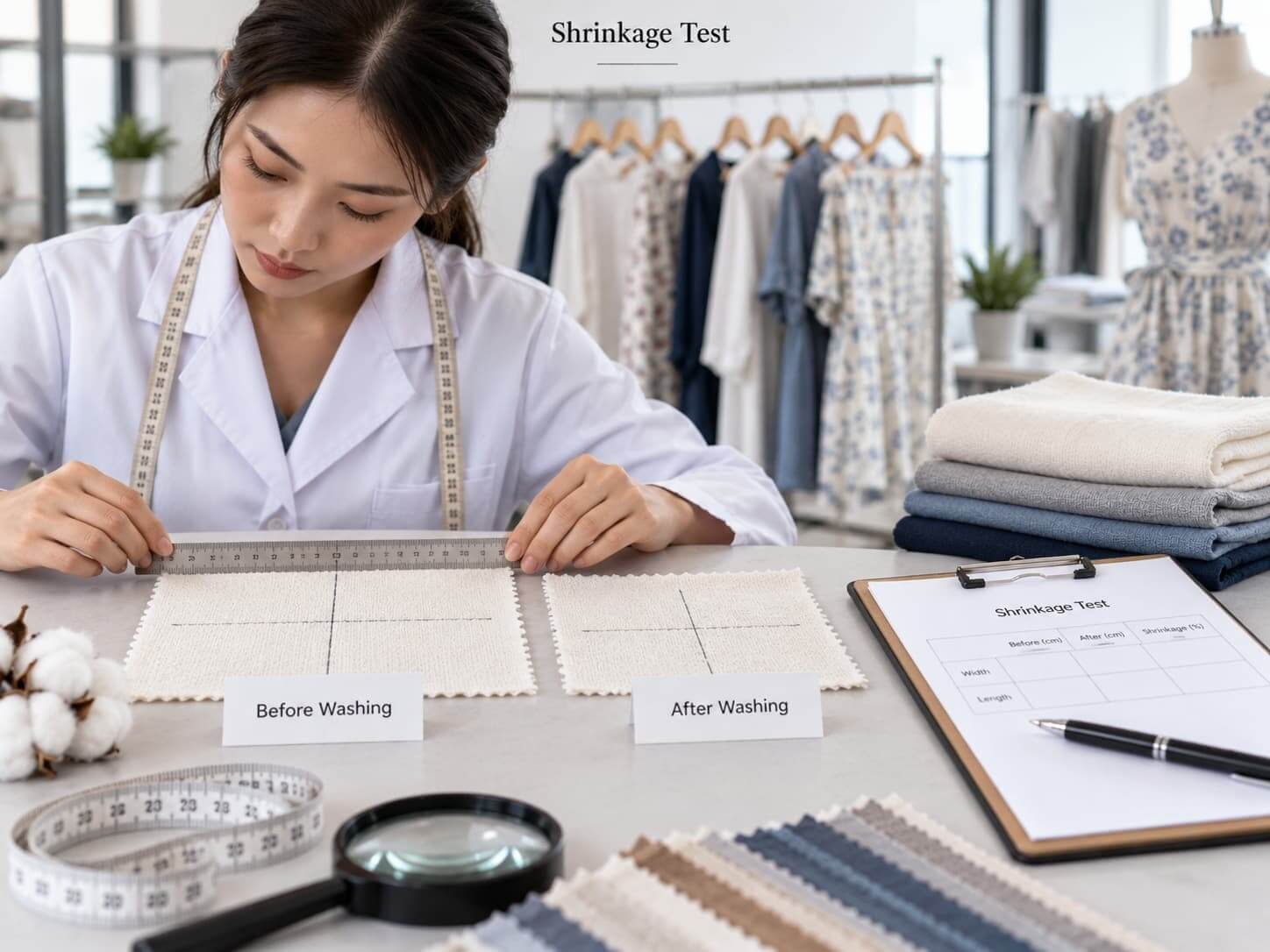
Cotton fabric may shrink during washing, depending on its construction, processing and finishing.
To check shrinkage:
- Measure a marked fabric sample.
- Wash and dry it according to the intended care instructions.
- Measure the sample again.
- Compare the measurements and calculate the change.
Record the results before approving the fabric for bulk production.
5. Check Colour Fastness
Colour fastness refers to how well fabric retains its colour during washing, rubbing and exposure to other conditions.
Check for colour transfer, fading and uneven dyeing. For large orders or strict quality requirements, consider suitable laboratory testing.
6. Inspect Fabric Construction
Examine the fabric for visible defects, including:
- Holes and broken yarns
- Loose threads
- Uneven knitting or weaving
- Slubs and irregular surfaces
- Stains and marks
- Uneven colour or shade variations
The acceptable defect level should match your product specifications and quality standards.
7. Evaluate Fabric Finishing
Fabric finishing can affect softness, appearance, texture and performance.
Check whether the material has the required finish, such as a smooth surface, soft hand feel or suitable shrinkage control. Confirm that the finish meets your garment requirements.
8. Check Fabric Width
Verify the usable fabric width against the supplier's specification. Fabric width can affect pattern layout, cutting efficiency and material consumption.
Record the approved width to help maintain consistency across production batches.
9. Compare Samples and Bulk Fabric
The approved sample should represent the quality expected in the final order.
Compare bulk fabric with the approved sample for composition, GSM, colour, texture, width and finish. Investigate noticeable differences before cutting or stitching begins.

10. Verify Supplier Specifications
Ask the supplier to document the agreed fabric specifications, including composition, GSM, colour, width, finish, quantity and delivery terms.
The approved sample should represent the quality expected in the final order.
Compare bulk fabric with the approved sample for composition, GSM, colour, texture, width and finish. Investigate noticeable differences before cutting or stitching begins.
Cotton Fabric Inspection Checklist
Use this quick checklist when evaluating a supplier's sample.
| Quality Check | What to Verify |
| Fabric composition
|
Matches the specification |
| GSM
|
Within the agreed tolerance |
| Texture
|
Consistent and suitable for the garment |
| Shrinkage
|
Tested against requirements |
| Colour fastness
|
Meets the intended use and standards |
| Construction
|
No unacceptable visible defects |
| Finishing
|
Matches the approved sample |
| Fabric width
|
Meets the required measurements |
| Shade consistency
|
Suitable across the batch |
|
Supplier documentation
|
Specifications are recorded |
How to Calculate Fabric Shrinkage
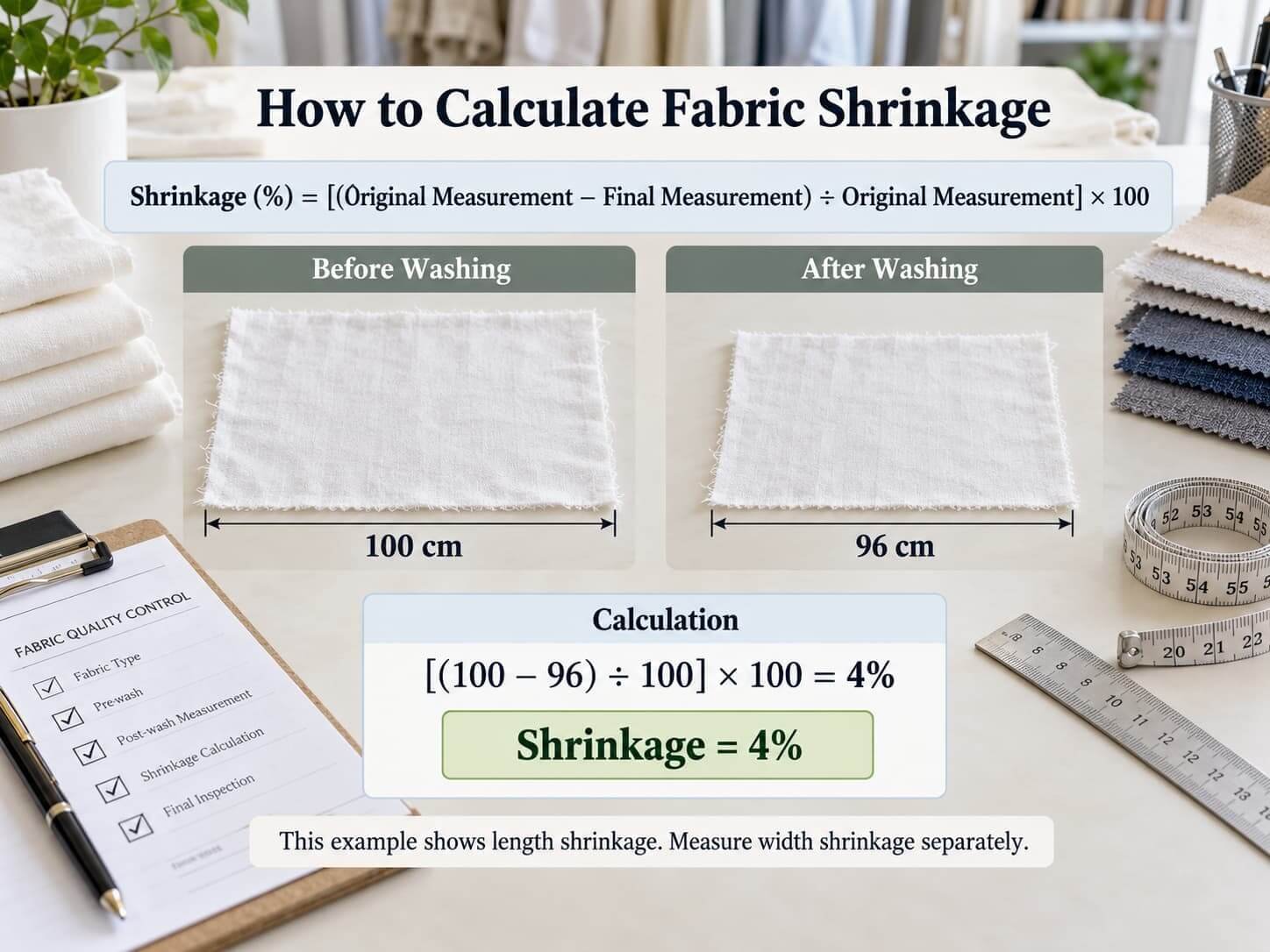
Manufacturers can estimate shrinkage by comparing the original and final measurements.
Shrinkage (%) = [(Original Measurement − Final Measurement) ÷ Original Measurement] × 100
For example, if a fabric sample measures 100 cm before washing and 96 cm afterwards:
Shrinkage = [(100 − 96) ÷ 100] × 100 = 4%
This example illustrates length shrinkage. Width shrinkage should be measured separately.
The acceptable shrinkage level depends on the garment, fabric and applicable product requirements.
Common Cotton Fabric Quality Mistakes
1. Choosing Fabric by Price Alone
Low-cost fabric may require additional processing or cause defects. Compare overall quality and total production costs, not just the purchase price.
2. Assuming Higher GSM Means Better Quality
GSM measures fabric weight, not every aspect of quality. Assess composition, construction, finishing and performance together.
3. Skipping Sample Testing
Always evaluate samples before committing to a large order. Testing helps identify potential problems early.
4. Ignoring Shade Differences
Different fabric batches may show colour variations. Check shade consistency before cutting garments in bulk.
5. Failing to Record Specifications
Without written specifications, it can be difficult to maintain consistent quality across repeat orders.
How Budjet Websites Can Help Clothing Brands
Fabric quality is one part of building a successful clothing business. A professional online presence also helps brands showcase their products and communicate with customers.
Budjet Websites can help clothing businesses create a professional website with product pages, clothing collections, brand information, enquiry options and e-commerce functionality.
A well-organised website can support product presentation and help your clothing brand establish its online presence.
Conclusion
A consistent cotton fabric quality checklist helps clothing manufacturers evaluate materials before bulk purchasing. Check composition, GSM, shrinkage, colour fastness, construction, finishing and supplier specifications before approving a fabric.
By testing samples and documenting requirements, clothing businesses can reduce avoidable defects, manage sourcing costs and maintain more consistent garment quality.
Frequently Asked Questions
1. How do manufacturers check cotton fabric quality?
Manufacturers check composition, GSM, texture, shrinkage, colour fastness, construction, finishing and consistency against approved specifications.
2. Does higher GSM mean better cotton fabric?
No. Higher GSM indicates heavier fabric, but the best choice depends on the garment, comfort requirements and intended use.
3. Why should cotton fabric be tested before bulk production?
Testing helps identify shrinkage, colour issues, construction defects and inconsistencies before they affect a large production run.