
Starting an online clothing business can help a fashion brand reach customers beyond its local market. Choosing the right platform is important because your website affects how customers browse products, place orders, make payments and interact with your brand.
The best website for selling clothes online should offer more than an attractive design. It should make it easy to manage products, accept payments, handle orders and support mobile shoppers.
Budjet Websites helps businesses build professional WordPress websites tailored to their requirements. For clothing brands planning to sell online, a well-designed e-commerce website can provide a foundation for showcasing products and building a recognisable brand.
What Makes a Good Clothing Website?
Before choosing a platform for your online clothing store, consider these essential features.
1. Easy Product Management
Your website should make it simple to add products, update prices, manage stock and organise clothing categories, sizes and colours.
2. Mobile-Friendly Design
A responsive clothing website should work smoothly on smartphones, tablets and desktops, allowing customers to browse and shop conveniently.
3. Secure Online Payments
Customers should have convenient payment options when they buy clothes online in India. Choose a website setup that supports suitable payment gateways and a secure checkout process.
4. Product Variations
Clothing products often come in different sizes, colours and styles. Your website should display these options clearly so customers can select the right products.
5. SEO Features
SEO-friendly URLs, page titles, meta descriptions and well-organised product categories can help search engines understand your website and improve its chances of attracting organic traffic.
6. Order and Inventory Management
E-commerce functionality should help you manage orders, stock levels and customer information efficiently as your business grows.
Best Website Options for Selling Clothes Online
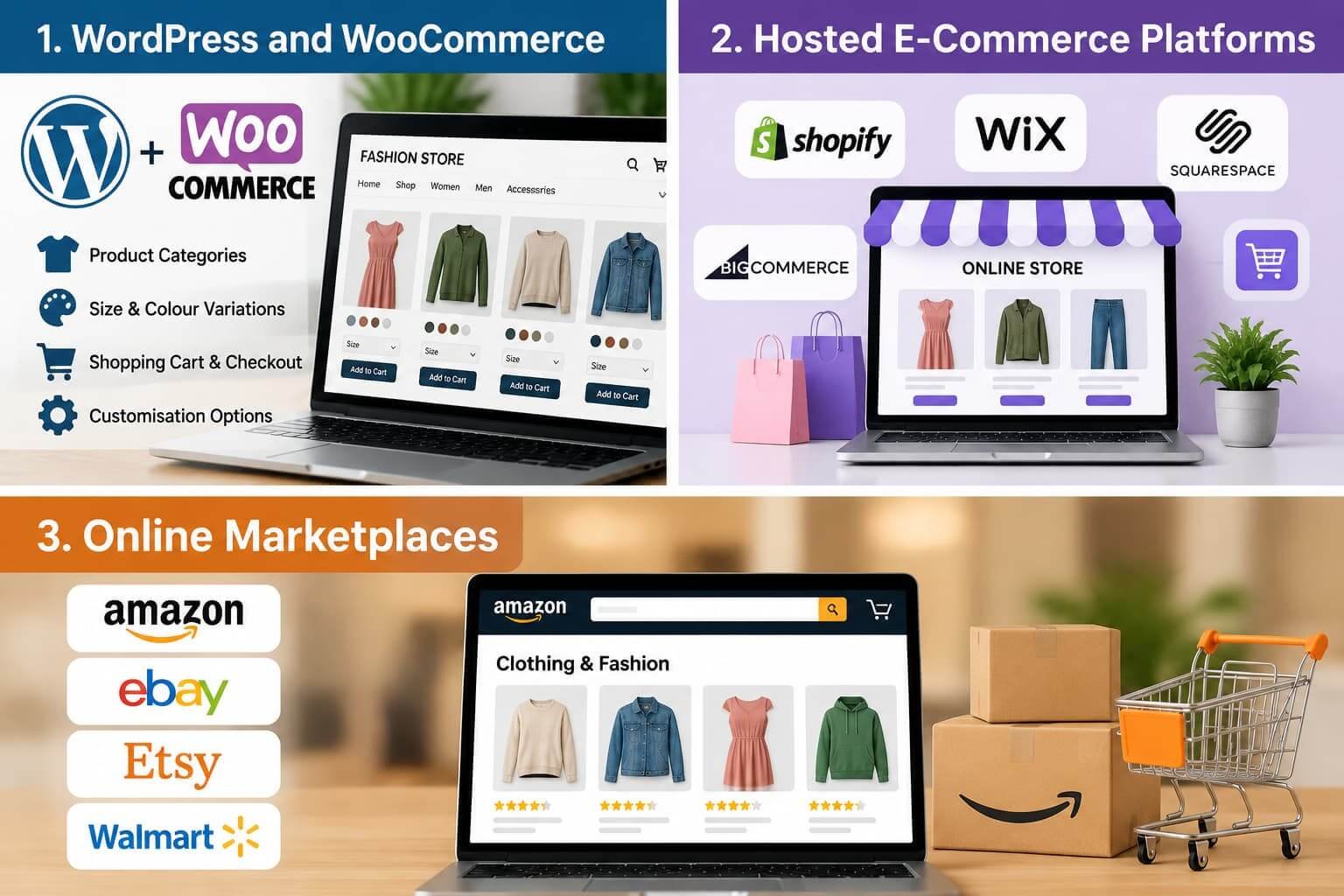
1. WordPress and WooCommerce
WordPress and WooCommerce help you build a flexible online clothing store. You can manage products, sizes, colours, payments and orders.
Budjet Websites can help businesses create a WordPress website suited to their needs.
2. Hosted E-Commerce Platforms
Hosted platforms make it easier to start an online clothing business without handling many technical tasks. Compare pricing, payment options and customisation features before choosing one.
3. Online Marketplaces
Online marketplaces help sellers reach existing customers. However, you have less control over branding and design than with your own clothing website. You can use marketplaces alongside your own website to reach more buyers.
Why Your Own Clothing Website Matters
Having your own website gives your clothing brand more control over its online presence.
You can create your own:
-
- Brand identity and design
- Product categories and product pages
- Pricing and promotions
- Customer shopping experience
- Blog and SEO strategy
- Marketing landing pages
- Customer communication channels
For business owners learning how to sell clothes online, a dedicated website can bring together visitors from search engines, social media, advertising and other marketing channels.
How to Choose the Best Website for Selling Clothes Online
1. Define Your Product Range
Decide how many products you plan to sell and whether you need size options, colour variations or product filters.
2. Set Your Website Budget
Consider website development, domain registration, hosting, payment gateway costs, maintenance, photography and marketing.
3. Check Payment Options
Choose a platform that supports convenient payment methods for your target customers in India.
4. Check Shipping Integration
If you plan to sell clothes online in India, consider shipping integrations, order tracking, delivery coverage and return management.
5. Consider SEO
Choose a website platform that allows you to manage important SEO elements, including page titles, URLs, meta descriptions and blog content.
6. Plan for Future Growth
Your business may eventually need additional products, categories, integrations and marketing features. Select a solution that can accommodate your future requirements.
Website vs Marketplace for a Clothing Brand
|
Factor |
Own Website |
Marketplace |
|
Brand control |
High |
Limited |
|
Design control |
High |
Limited |
|
Customer experience |
Customisable |
Platform-controlled |
|
SEO opportunities |
Direct control over your site |
Platform-dependent |
|
Customer acquisition |
You manage it |
Existing marketplace traffic |
|
Brand building |
Strong potential |
Platform-dependent |
|
Long-term control |
High |
Lower |
How Budjet Websites Can Help Your Clothing Business
Choosing the best website for selling clothes online involves more than selecting a platform. Your website should present products professionally, communicate your brand identity and make purchasing simple.
Budjet Websites offers WordPress website development services for businesses that want a professional online presence.
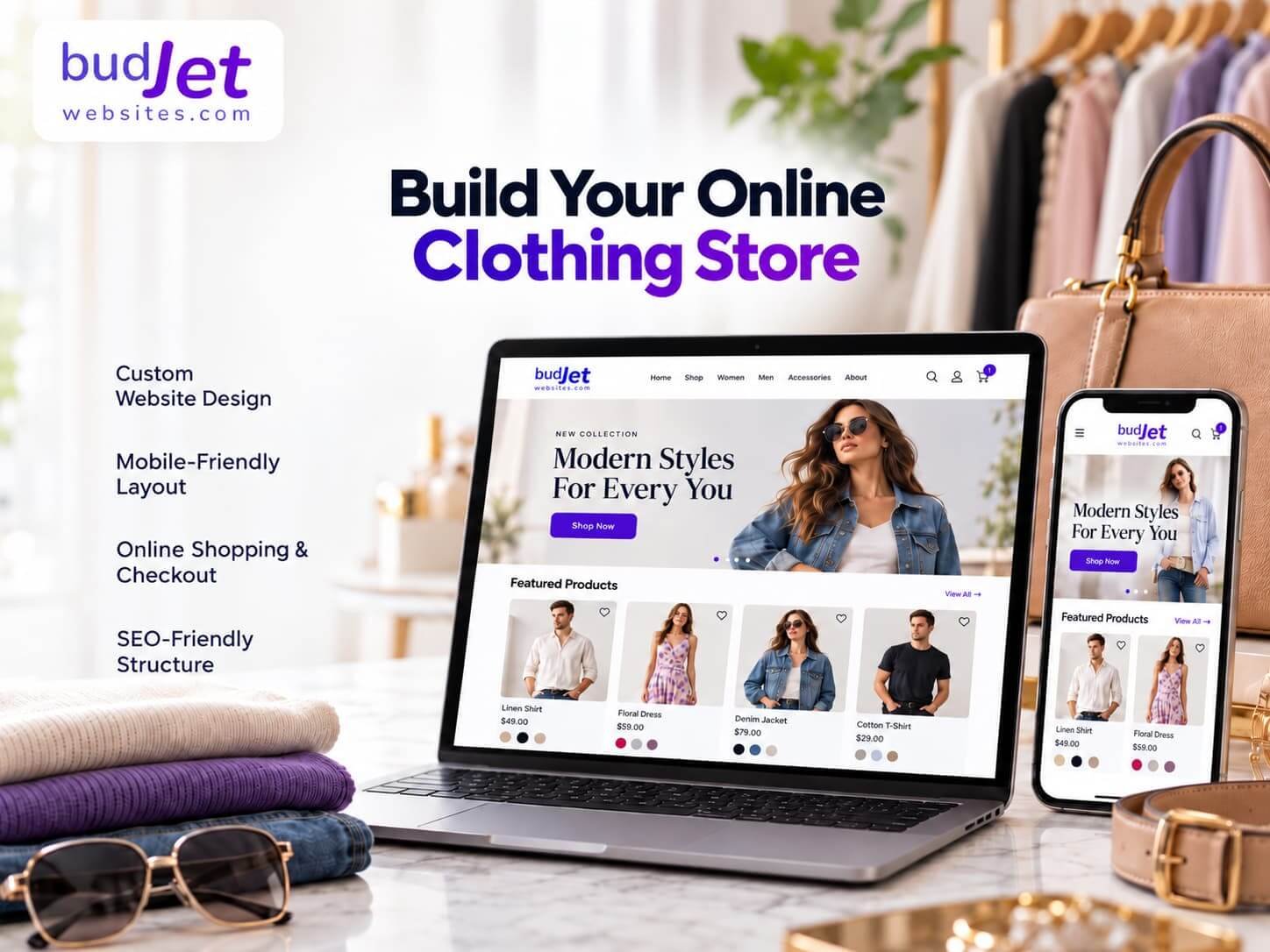
Depending on the project requirements, a clothing e-commerce website can include:
-
- Customised website design
- Product categories and product pages
- Shopping cart and checkout functionality
- Mobile-friendly layouts
- Contact forms and customer enquiry options
- SEO-friendly website structure
- Essential e-commerce integrations
If you are planning to launch an online clothing store, visit Budjet Websites to explore website development services.
Conclusion
The best website for selling clothes online depends on your business goals, budget, product range and growth plans.
Marketplaces can help you reach existing shoppers, while your own online clothing store gives you greater control over branding, customer experience and long-term SEO.
With a suitable platform and professional development support from Budjet Websites, you can create a clothing website that showcases your products, supports online orders and provides a foundation for growing your fashion business.
SEO recommendation: Use Budjet Websites in the meta title, the website development section, and the conclusion. This builds brand awareness while keeping the primary keyword focused on the reader's search intent.