

Starting a clothing brand involves more than selecting products, finding suppliers and building a website. Before you begin selling, it is important to understand the clothing business registration process, choose an appropriate business structure and identify the registrations that may apply to your business.
The right setup can depend on whether you operate as a sole proprietor, partnership, LLP or company, whether you manufacture or only sell clothing, where your business operates, and how you sell your products.
This guide explains the main clothing business legal requirements in India, including business structures, company incorporation, GST, MSME registration and online selling considerations.
Important: Registration and tax requirements can change based on your business activities, turnover, state and sales model. Verify current requirements with the relevant government authority or a qualified professional before making legal or tax decisions.
1. Do You Need to Register a Clothing Business in India?
There is no single registration that applies identically to every clothing business.
The requirements can depend on your business structure and activities. For example, a person starting a small clothing business may operate as a proprietorship, while multiple founders may consider a partnership or LLP. A business that wants a separate corporate entity may consider a private limited company.
Your clothing business registration in India may involve different registrations or approvals depending on factors such as:
-
- Business structure
- State and location
- Turnover
- Manufacturing activities
- Online sales
- Interstate sales
- Employees
- GST applicability
- Local business regulations
Therefore, it is better to identify the business model first and then determine which registrations apply.
2. Choose the Right Business Structure
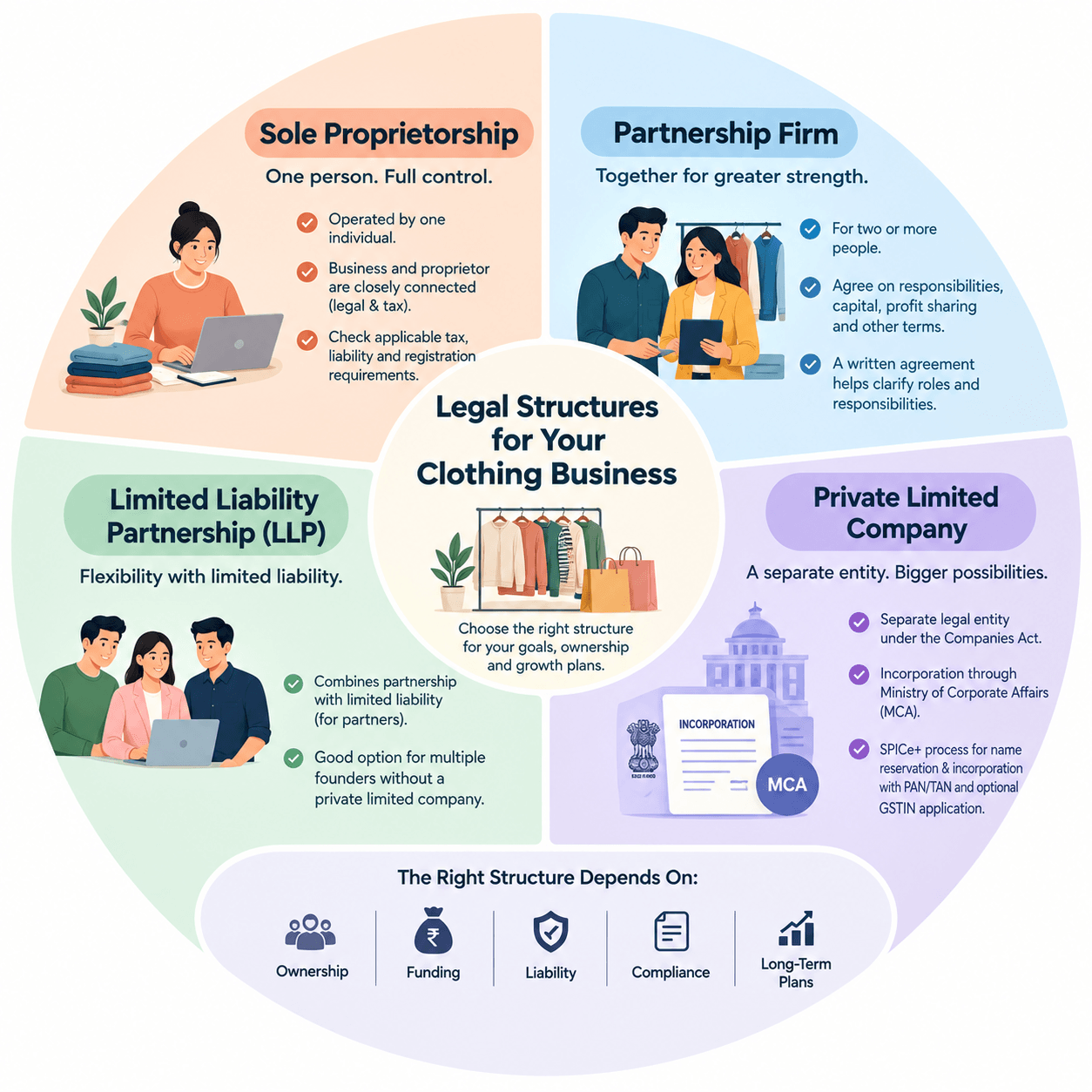
3. Register Your Clothing Business
Once you have selected a business structure, determine the applicable business registration process.
For a company, incorporation is handled through the MCA system. The SPICe+ process includes company name reservation and incorporation services.
For other structures, the registration route can be different.
Before beginning the process, prepare information such as:
-
-
- Proposed business name
- Owner or partner details
- Business address
- PAN and identity information
- Contact details
- Business activity
- Ownership information
- Required supporting documents
-
Do not assume that company incorporation, GST registration and MSME registration are the same thing. They serve different purposes and may apply separately.
4. Understand GST Registration
GST registration for a clothing business depends on the nature of your supplies, turnover and other conditions under GST law.
CBIC's published guidance states that the general threshold for suppliers of goods is ₹40 lakh, with lower thresholds applying in specified states. However, GST registration can also become applicable under other conditions, so turnover alone should not be the only factor considered. (CBIC GST)
For example, the GST rules contain specific provisions relating to interstate supplies and certain supplies through e-commerce operators.
(If you are unsure whether your clothing business needs GST registration, check the current rules applicable to your business and state with the GST authorities or a tax professional)
Why GST Matters for a Clothing Brand
Depending on your situation, GST can affect:
-
-
- Tax invoices
- GST collection
- Input tax credit
- Business-to-business sales
- Interstate sales
- E-commerce sales
- GST returns
- Accounting records
-
Do not rely on an old turnover threshold or a generic online checklist because GST rules and notifications can change.
5. Consider Udyam MSME Registration
If your clothing business qualifies as a micro, small or medium enterprise, you can also consider Udyam Registration.
The official Udyam portal states that registration is online, paperless and based on self-declaration. It also states that there is no fee for Udyam Registration and that a permanent Udyam Registration Number and certificate are issued after registration.
The current MSME classification uses investment and turnover criteria. The official portal lists the post-April 2025 limits for micro, small and medium enterprises. (Udyam Registration)
Udyam registration is separate from company registration and should not be treated as a replacement for incorporation or other registrations that may apply to your business.
6. Check Other Licenses and Registrations
Your clothing business legal requirements may extend beyond company or GST registration.
Depending on your location and activities, you may need to check requirements relating to:
-
- Local business permissions
- Shops and establishments regulations
- Factory-related requirements
- Employee-related registrations
- Import and export requirements
- Trademark protection
- Product-specific regulations
- Local municipal requirements
These requirements can vary by state, business activity and operating model.
For example, a home-based online clothing seller and a clothing manufacturer operating a production facility may not have the same regulatory requirements.
7. Consider Trademark Registration for Your Clothing Brand
Your brand name can become one of your most valuable business assets.
If you are building a long-term clothing brand, consider researching your proposed:
-
- Brand name
- Logo
- Tagline
- Product names
Before using a name commercially, check whether similar trademarks already exist.
Trademark registration is different from clothing company registration. Incorporating a company does not automatically mean that your brand name has trademark protection.
If brand protection is important to your business, consider getting advice from a qualified trademark professional.
8. Open a Business Bank Account
Once your business structure and applicable registrations are established, maintain separate financial records for the business.
A dedicated business bank account can make it easier to track:
-
-
- Customer payments
- Supplier payments
- Advertising expenses
- Shipping costs
- Business subscriptions
- Refunds
- Operating expenses
-
Avoid mixing personal and business transactions wherever possible.
Keeping clear records can also make accounting and financial reporting easier as your clothing business grows.
9. Prepare Your Business Documents
Good documentation is an important part of running a clothing business.
Depending on your structure and activities, maintain appropriate records such as:
-
-
- Registration certificates
- GST documents, where applicable
- Udyam certificate, where applicable
- Supplier invoices
- Purchase records
- Sales invoices
- Bank statements
- Accounting records
- Partnership agreements
- Company incorporation documents
- Trademark documents
- Shipping records
-
Organized records can help you understand your business finances and respond to compliance requirements more efficiently.
10. Legal Requirements for Selling Clothing Online
If you plan to operate an online clothing business, consider the legal and operational requirements associated with selling products through your own website or marketplaces.
Your website should provide customers with clear information about:
-
- Product details
- Prices
- Shipping
- Payment methods
- Returns
- Exchanges
- Refunds
- Customer support
- Privacy and website policies
The exact legal requirements can vary depending on how your website operates, what information you collect and how you process payments.
If you sell through marketplaces, also review the platform's seller requirements and applicable tax obligations.
11. Understand Clothing Product Information
A clothing business should provide accurate product information to customers.
Depending on the product, this may include:
-
- Fabric composition
- Size
- Colour
- Care instructions
- Product dimensions
- Country of origin, where applicable
- Manufacturer or marketer details, where applicable
Do not make claims about fabric quality, sustainability, certifications or product performance unless you can support those claims.
Accurate product information can also help reduce customer confusion and unnecessary returns.
12. Keep Business and Personal Finances Separate
Business Income
- Product sales
- B2B orders
- Marketplace sales
- Website sales
Business Expenses
- Manufacturing
- Fabric
- Packaging
- Shipping
- Advertising
- Website costs
- Employee expenses
- Professional fees
13. Common Legal and Registration Mistakes
New entrepreneurs can make avoidable mistakes when setting up a clothing business.
1. Choosing a Structure Without Understanding It
Do not select a sole proprietorship, partnership, LLP or private limited company only because another business uses it.
Understand the ownership, liability, tax and compliance implications first.
2. Assuming GST Is Automatically Required
GST registration depends on applicable rules and business circumstances. Do not rely only on a generic turnover figure.
3. Treating Udyam as Company Registration
Udyam Registration and company incorporation are different processes with different purposes. (Udyam Registration)
4. Ignoring State-Level Requirements
Local and state requirements can vary. Check the rules applicable to your business location and activities.
5. Using a Brand Name Without Checking It
Research your proposed brand name before investing heavily in packaging, labels, websites and marketing.
6. Mixing Personal and Business Transactions
Poor financial records can make it difficult to understand your actual business performance.
14. Clothing Business Registration Checklist
Before launching your clothing brand, review this checklist:
-
-
- Choose your clothing business model
- Identify the business owners
- Select a suitable business structure
- Choose a business name
- Check brand and trademark availability
- Prepare required documents
- Complete applicable clothing business registration
- Check GST registration requirements
- Consider Udyam Registration
- Check state and local requirements
- Open a suitable business bank account
- Maintain accounting records
- Prepare invoices
- Create website policies
- Prepare shipping and return policies
- Maintain supplier documents
- Review applicable product information requirements
- Check additional requirements before interstate or international sales
-
15. How to Register a Clothing Business in India: Simple Process
Before launching your clothing brand, review this checklist:
-
-
- Choose your clothing business model
- Identify the business owners
- Select a suitable business structure
- Choose a business name
- Check brand and trademark availability
- Prepare required documents
- Complete applicable clothing business registration
- Check GST registration requirements
- Consider Udyam Registration
- Check state and local requirements
- Open a suitable business bank account
- Maintain accounting records
- Prepare invoices
- Create website policies
- Prepare shipping and return policies
- Maintain supplier documents
- Review applicable product information requirements
- Check additional requirements before interstate or international sales
-
FAQs About Clothing Business Registration
1. What registration is required for a clothing business in India?
The requirements depend on your business structure, location, turnover and activities. They may include business registration, GST registration where applicable, Udyam registration if eligible, and state or local registrations.
2. Can I start a clothing business as a sole proprietor?
A person can operate a clothing business as a sole proprietor, subject to applicable registrations, tax rules and local requirements.
3. Is GST registration mandatory for every clothing business?
No single rule applies to every clothing business. GST registration depends on applicable turnover thresholds and other conditions. Check the current GST rules for your specific situation.
4. Is Udyam Registration mandatory for a clothing business?
Udyam Registration is a separate MSME registration. Whether you should obtain it depends on your circumstances and eligibility. The official portal provides the current registration process and classification criteria.
5. Can I register my clothing business online?
Many government registration processes are available online. Company incorporation, for example, is handled through the MCA's online system using the applicable incorporation process.