
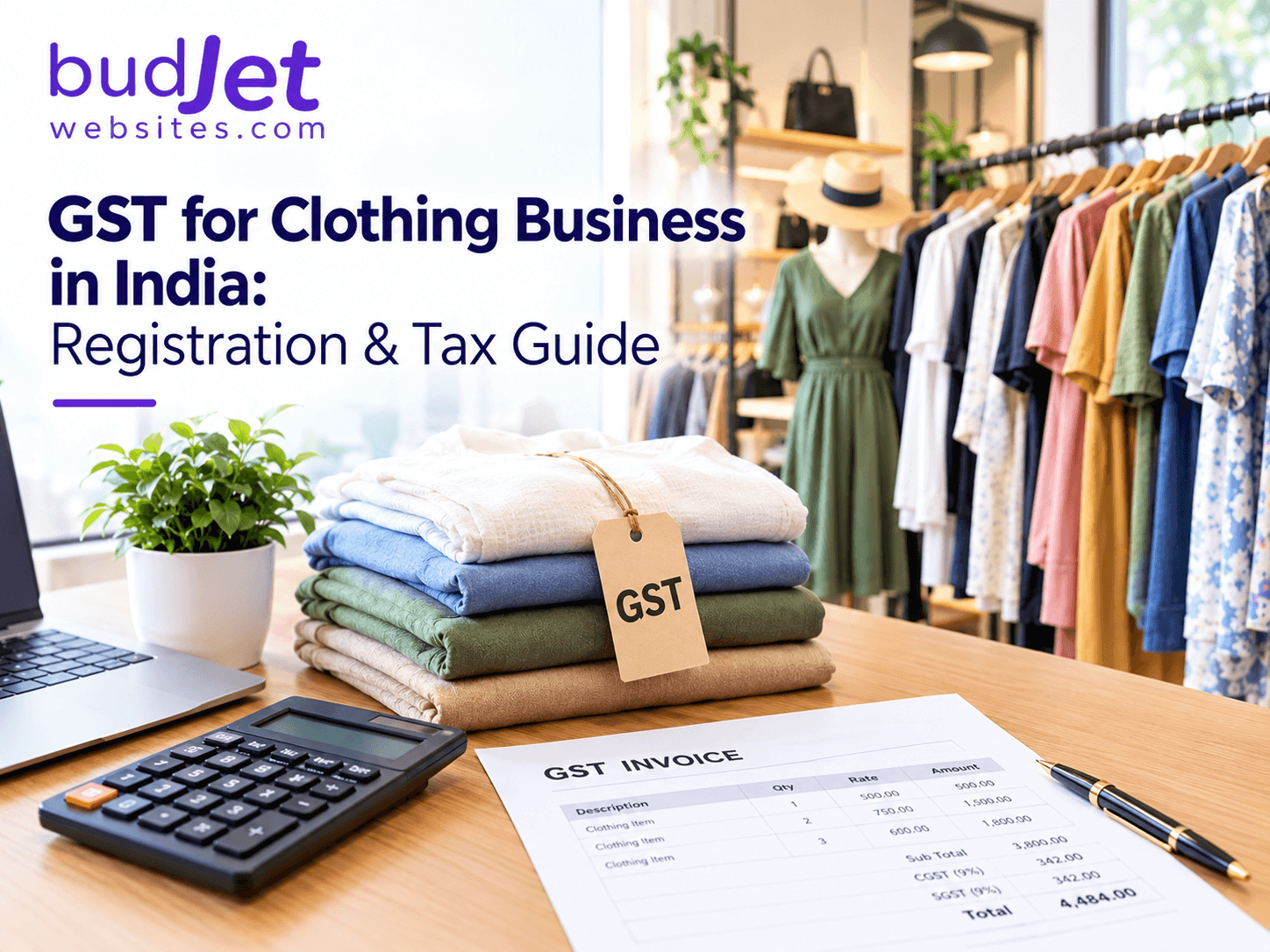
Starting a clothing business involves more than choosing products, suppliers, and a brand name. Understanding GST for clothing business is also important if you plan to sell clothes through your website, marketplaces, retail stores, or other channels.
Whether you are launching a small clothing brand or building a larger online fashion business, understanding GST registration for clothing business, GST invoices, applicable rates, input tax credit, and return filing can help you manage your business more effectively.
This guide explains the key GST rules for clothing business owners in India in simple terms.
What Is GST for a Clothing Business?
GST, or Goods and Services Tax, is an indirect tax applicable to the supply of goods and services in India.
For clothing entrepreneurs, GST on clothing depends on the type of product and its applicable classification. The GST rate should therefore be checked against the correct HSN classification and current government notifications.
For example, CBIC states that readymade garments with a transaction value not exceeding ₹1,000 per piece attract 5% GST, while those exceeding ₹1,000 per piece attract 12% under the cited classification. The transaction value, rather than simply the retail price, is relevant to that specific entry. (CBIC GST)
This is why clothing businesses should verify the applicable GST rate and HSN code for each product category instead of applying one GST rate to every item.
Is GST Registration Mandatory for a Clothing Business?
One of the most common questions new entrepreneurs ask is: is GST registration mandatory for clothing business?
The answer depends on factors such as your turnover, type of supply, selling method, and applicable GST provisions.
Businesses should check whether they cross the applicable registration threshold or fall under a category where registration is required regardless of turnover.
The GST registration rules provide for electronic registration through the GST portal for persons liable to register, while specific compulsory-registration provisions can apply in particular circumstances.
1. Selling Clothes Through Your Own Website
If you sell clothing through your own website, your GST obligations depend on your business circumstances and the nature of your supplies.
You should consider:
-
- Business turnover
- State of supply
- Interstate sales
- Product classification
- Whether registration is otherwise compulsory
- Applicable GST notifications
Do not assume that simply having a website automatically determines your GST liability.
2. Selling Through E-Commerce Marketplaces
Selling through marketplaces can involve additional GST compliance considerations.
GST rules have specific provisions for supplies made through e-commerce operators, and businesses should check the current rules applicable to their selling model.
How to Get GST Registration for Clothing Business
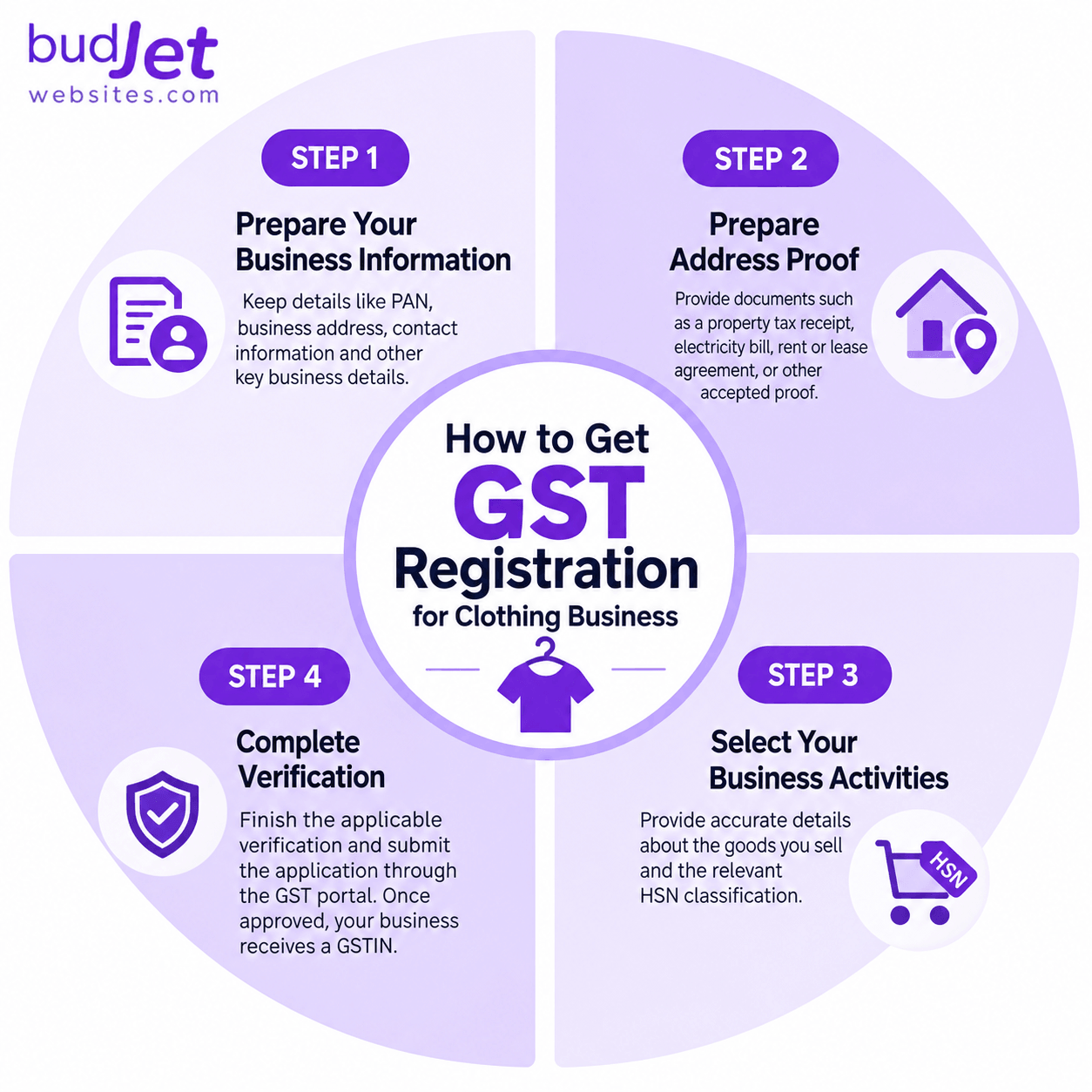
The basic process generally involves providing business and taxpayer information and submitting supporting documents.
Step 1: Prepare Your Business Information
Keep details such as:
-
-
-
- PAN
- Business details
- Contact information
- Business address
- Bank information where required
- Details of authorised signatory
- Business constitution
-
-
Step 2: Prepare Address Proof
Depending on the circumstances, GST registration documentation can include documents such as a property tax receipt, electricity bill, rent or lease agreement, consent letter, or other accepted proof of the principal place of business.
Step 3: Select Your Business Activities
When applying, provide accurate information about the goods you sell and the relevant HSN classification.
For example, the GST registration system includes functionality for searching and selecting HSN codes for goods.
Step 4: Complete Verification
Complete the applicable verification and submit the application through the GST portal.
Once approved, your business receives a GSTIN.
What Is the GST Rate on Clothing?
The GST rate on clothing is not necessarily the same for every clothing product.
It can depend on:
-
- Product category
- HSN classification
- Transaction value
- Material or product characteristics
- Applicable government notifications
For example, CBIC's GST FAQ currently states that specified readymade garments with a sale value of up to ₹1,000 per piece attract 5% GST, while those above ₹1,000 per piece attract 12%.
Therefore, before publishing prices on your website, verify the applicable GST on clothes for your specific products.
Why HSN Codes Matter
HSN codes help classify goods for GST purposes.
A clothing business may sell multiple product categories, such as:
-
- T-shirts
- Shirts
- Dresses
- Trousers
- Jackets
- Kidswear
- Sarees
- Ethnic wear
- Accessories
Each product should be correctly classified rather than assigning a GST rate based only on the product name.
GST for Online Clothing Business
An online clothing business can sell through several channels:
-
- Your own website
- Online marketplaces
- Social media
- Other e-commerce platforms
- Physical retail stores
- Wholesale channels
Your compliance requirements may differ depending on how and where you sell.
1. Selling Through Your Own Website
If you build your own online clothing store, you should establish a system for:
-
-
- Product pricing
- GST calculation
- GST invoices
- Customer information
- Order records
- Sales records
- Returns and refunds
- Tax reporting
-
This is where Budjet Websites can help clothing entrepreneurs create a professional business website designed around their products, brand identity, and online sales journey.
2. Selling Through Marketplaces
If you sell through marketplaces, understand how the platform handles:
-
-
- Orders
- GST information
- Tax collection requirements
- Invoices
- Returns
- Refunds
- Settlement reports ---->
Do not rely only on the marketplace dashboard. Maintain your own business records as well.
-
What Is GSTIN?
GSTIN stands for Goods and Services Tax Identification Number.
After successful GST registration, the registered business receives a GSTIN.
Your GSTIN becomes an important part of your GST-related business documentation and invoices.
For an online clothing brand, keeping your GST details consistent across invoices, accounting records, and business documents can help maintain organised tax records.
GST Invoice for Clothing Business
A proper GST invoice is an important part of GST compliance.
Depending on the transaction, an invoice can contain information such as:
-
-
- Seller's business details
- GSTIN where applicable
- Invoice number
- Invoice date
- Customer details where required
- Product description
- HSN code
- Quantity
- Taxable value
- Applicable GST rate
- GST amount
- Total invoice value ----> Your invoicing system should be configured correctly for your business.
-
Input Tax Credit for Clothing Businesses
Input tax credit allows eligible registered businesses to claim credit for GST paid on qualifying business purchases, subject to the applicable GST rules and conditions.
For example, a clothing business may have GST-bearing expenses related to eligible purchases or business inputs.
However, not every expense automatically qualifies for input tax credit.
You should maintain:
-
-
- Valid purchase invoices
- Supplier GST details
- Purchase records
- Payment records
- GST returns
- Supporting documentation -----> Before claiming credit, confirm that the purchase satisfies the applicable GST requirements.
-
GST Returns and Record Keeping
GST registration comes with compliance responsibilities.
A registered clothing business may need to maintain information relating to:
-
- Sales
- Purchases
- GST invoices
- Credit notes
- Debit notes
- Input tax credit
- Output tax
- E-commerce transactions
- HSN-wise sales information
GST return filing should be completed according to the applicable return requirements and filing schedule.
For example, the GST portal provides functionality for reporting outward supplies, including supplies made through e-commerce operators.
Your process could look like this:
Product Selection → HSN Classification → GST Verification → Product Pricing → GST Invoice → Order → Sales Record → GST Compliance
Common GST Mistakes Clothing Businesses Make
1. Using the Wrong GST Rate
Do not assume that every clothing product has the same GST rate.
Verify the relevant classification.
2. Ignoring HSN Codes
Incorrect HSN code selection can create problems with invoices and GST reporting.
3. Mixing Personal and Business Transactions
Keep business purchases and personal expenses separate.
This makes accounting and tax records easier to manage.
4. Not Maintaining Purchase Invoices
Purchase invoices can be important when determining eligibility for input tax credit.
Keep your records organised.
5. Assuming Website Sales Have No GST Requirements
Selling through your own website does not mean you can ignore GST considerations.
Review your turnover and applicable registration requirements.
6. Not Checking Marketplace Requirements
Different e-commerce selling arrangements can have different compliance implications.
Understand the GST responsibilities associated with your chosen platform.
7. Using Outdated GST Information
GST rates, notifications, procedures, and compliance rules can change.
Always verify current requirements before making business decisions.
How Budjet Websites Can Help Your Clothing Business
Starting a clothing brand requires more than tax planning.
You also need a professional online presence that allows customers to discover your products and understand your brand.
Budjet Websites can help you build a professional WordPress website for your clothing business.
Your website can include:
-
-
- Clothing product pages
- Category pages
- Brand story
- About page
- Contact page
- Shopping functionality
- Product images
- Payment integration
- Order functionality
- Mobile-friendly design
- SEO-friendly website structure
-
A well-structured website can become an important part of your overall online clothing business strategy.
If you're still planning your clothing brand, read our main guide: How to Start a Clothing Brand in India.
Conclusion
Understanding GST for clothing business is an important part of building a clothing brand in India.
Before launching your store, determine whether you need GST registration for clothing business, identify the correct HSN classification, verify the applicable GST on clothing, prepare proper invoices, and establish a system for maintaining sales and purchase records.
If you're building an online clothing brand, tax compliance should work alongside your branding, website, product sourcing, marketing, and customer experience.
With the right planning and a professional website from Budjet Websites, you can create a stronger foundation for your online clothing business.