
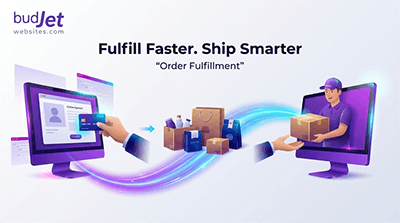
The Importance of Efficient Order Fulfillment
In eCommerce, customers judge your business not only by the quality of your products but also by how quickly and accurately their orders arrive. A smooth Order Fulfillment process ensures products are picked, packed, shipped, and delivered efficiently, creating a positive customer experience that encourages repeat purchases.
Today's shoppers expect same-day processing, real-time updates, and reliable delivery. If orders are delayed, packed incorrectly, or shipped to the wrong address, customer satisfaction decreases and return rates increase.
Efficient Order Fulfillment is therefore a critical part of Shipping Logistics Optimization. It helps businesses reduce operational costs, improve delivery speed, and build long-term customer trust.
In this guide, you'll discover practical Order Fulfillment Best Practices that improve warehouse efficiency, reduce fulfillment errors, and support sustainable business growth.
What Is Order Fulfillment?
Order Fulfillment is the complete process of receiving, processing, packing, shipping, and delivering customer orders.
A typical fulfillment workflow includes:
- Order received
- Inventory verification
- Picking products
- Packing orders
- Shipping
- Delivery Tracking
- Successful delivery
Each stage must work efficiently to avoid delays and maintain customer satisfaction
Order Fulfillment Workflow
Customer Places Order
│
▼
Inventory Check
│
▼
Pick Products
│
▼
Pack Order
│
▼
Shipping Label Generated
│
▼
Courier Pickup
│
▼
Delivery Tracking
│
▼
Customer Receives Order
A delay at any step affects the overall customer experience.
Why Efficient Order Fulfillment Is Important
Businesses with optimized Order Fulfillment often experience:
- Faster deliveries
- Lower operational costs
- Better inventory accuracy
- Fewer shipping mistakes
- Higher customer satisfaction
- Increased repeat purchases
A well-managed fulfillment process also supports Shipping Logistics Optimization by reducing unnecessary handling and improving workflow efficiency.
Signs Your Fulfillment Process Needs Improvement
You may need to optimize your fulfillment process if you experience:
- Frequent shipping delays
- Incorrect orders
- High return rates
- Inventory mismatches
- Rising fulfillment costs
- Customer complaints about delivery
Identifying these issues early helps prevent long-term operational problems.
8 Best Practices for Faster Order Fulfillment
1. Organize Your Warehouse Layout
Arrange products based on:
- Best-selling items
- Seasonal demand
- Product categories
- Order frequency
Frequently ordered products should be stored close to packing stations.
Benefits
- Faster picking
- Improved productivity
- Lower labor costs
- Reduced fulfillment time
A poorly organized warehouse increases picking time and labor costs.
2. Improve Inventory Management
Accurate Inventory Management prevents overselling and stock shortages.
Modern inventory systems provide:
- Real-time stock updates
- Automatic inventory synchronization
- Low-stock alerts
- Demand forecasting
Better inventory accuracy improves Order Fulfillment while reducing canceled orders.
3. Automate Repetitive Tasks
Manual processes slow fulfillment and increase human error.
Businesses should automate:
- Shipping label generation
- Order routing
- Inventory updates
- Customer notifications
- Tracking emails
Using Shipping Automation improves speed while allowing staff to focus on higher-value tasks.
4. Standardize Packing Procedures
Consistent packing processes improve efficiency and reduce mistakes.
Create packing guidelines that include:
- Approved packaging materials
- Packing sequence
- Label placement
- Product protection standards
Standardization also creates a more consistent customer experience.
5. Reduce Picking Errors
Incorrect picking is one of the leading causes of returns.
Businesses can reduce errors by using:
- Barcode scanners
- Mobile picking apps
- Digital picking lists
- Warehouse Management Systems (WMS)
Improving picking accuracy reduces return costs and improves customer satisfaction.
6. Choose the Right Fulfillment Model
Every business has different fulfillment requirements. Choosing the right model helps control costs while improving delivery performance.
Common Order Fulfillment models include:
In-House Fulfillment
Businesses manage inventory, packing, and shipping internally.
Best suited for:
- Small businesses
- Growing eCommerce stores
- Businesses requiring complete control
Advantages:
- Direct quality control
- Flexible operations
- Better visibility
Challenges:
- Requires warehouse space
- Higher operational responsibility
Third-Party Fulfillment (3PL)
A third-party logistics provider manages storage, packing, and shipping on behalf of the business.
Best suited for:
- Growing brands
- High-volume sellers
- Businesses expanding into new markets
Benefits:
- Faster scaling
- Professional warehouse operations
- Reduced operational workload
Dropshipping Fulfillment
Products are shipped directly from suppliers to customers.
Benefits:
- Lower inventory investment
- Reduced warehouse requirements.
However, businesses must carefully manage supplier reliability and delivery quality.
Choosing the right fulfillment model improves Shipping Logistics Optimization and supports business growth
7. Improve Delivery Speed Through Better Workflows
Speed does not always require more employees or larger warehouses.
Often, small workflow improvements create major efficiency gains.
Businesses can improve fulfillment speed by:
- Processing orders immediately after purchase.
- Creating clear picking routes.
- Preparing frequently ordered products in advance.
- Reducing unnecessary handling steps.
- Automating customer notifications.
A streamlined workflow helps reduce the time between order placement and shipment.
8. Use Warehouse Management Systems (WMS)
A Warehouse Management System (WMS) helps businesses manage inventory movement and warehouse operations more efficiently.
A WMS can help with:
- Inventory tracking
- Product location management
- Order prioritization
- Employee task assignment
- Warehouse reporting
For businesses handling hundreds or thousands of orders, a WMS can significantly improve Order Fulfillment accuracy and speed.
9. Improve Customer Communication
Customers want visibility after placing an order.
Clear communication throughout the fulfillment process improves trust.
Businesses should provide:
- Order confirmation emails
- Shipment notifications
- Tracking links
- Delivery updates
- Delay notifications when necessary
Strong communication reduces customer anxiety and decreases support requests.
10. Create a Strong Returns Management Process
Returns are part of eCommerce operations.
A poor returns process can increase costs and negatively affect customer experience.
Improve returns by:
- Creating clear return policies.
- Inspecting returned products quickly.
- Restocking eligible items faster.
- Tracking return reasons.
Understanding why customers return products can also reveal opportunities to improve product quality and fulfillment accuracy.
Warehouse Optimization Checklist
|
Best Practice |
Business Benefit |
|
Organized warehouse |
Faster picking |
|
Accurate inventory |
Better stock control |
|
Shipping Automation |
Higher efficiency |
|
Standard packing |
Fewer mistakes |
|
Barcode scanning |
Improved accuracy |
Optimizing warehouse operations creates the foundation for faster Order Fulfillment.
Order Fulfillment Performance Dashboard
Businesses should measure fulfillment performance using important KPIs.
|
KPI |
Purpose |
|
Order Processing Time |
Measures speed from purchase to shipment |
|
Fulfillment Accuracy Rate |
Tracks order correctness |
|
Inventory Accuracy |
Measures stock reliability |
|
On-Time Shipment Rate |
Evaluates shipping efficiency |
|
Return Rate |
Identifies fulfillment problems |
|
Customer Satisfaction Score |
Measures delivery experience |
Regular tracking helps businesses identify problems and continuously improve operations.
The Perfect Fulfillment Cycle
Accurate Inventory
│
▼
Efficient Picking
│
▼
Quality Packing
│
▼
Fast Shipping
│
▼
Customer Tracking
│
▼
Successful Delivery
│
▼
Repeat Purchase
A successful fulfillment process creates a cycle where operational efficiency leads to better customer loyalty.
Common Order Fulfillment Mistakes to Avoid
1. Poor Inventory Accuracy
Incorrect stock information leads to canceled orders and customer disappointment.
Solution:
Use real-time Inventory Management systems.
2. Slow Order Processing
Delays between order placement and shipment reduce customer satisfaction.
Solution:
Automate repetitive tasks and improve workflows.
3. Lack of Tracking Updates
Customers become frustrated when they cannot see order progress.
Solution:
Provide accurate Delivery Tracking information.
4. Ignoring Packaging Quality
Poor packaging increases product damage and returns.
Solution:
Use appropriate packaging materials and standardized procedures.
5. Scaling Too Quickly Without Systems
Rapid growth without proper fulfillment processes can create operational problems.
Solution:
Invest in technology and scalable workflows before increasing order volume.
Conclusion
Fast and accurate Order Fulfillment has become a major competitive advantage in eCommerce.
Customers expect businesses to deliver products quickly, communicate clearly, and provide a reliable buying experience.
By improving warehouse organization, automating processes, managing inventory effectively, and tracking fulfillment performance, businesses can reduce costs while increasing customer satisfaction.
The strongest eCommerce brands understand that fulfillment is not just a backend operation—it is a key part of the customer experience.
Investing in Order Fulfillment Best Practices helps businesses create faster deliveries, stronger customer relationships, and sustainable growth.
At Budjet Websites, we help businesses create effective digital strategies that support growth and operational improvement.Whether you are improving Order Fulfillment, optimizing shipping operations, or building a stronger online presence, strategic planning can help your business scale successfully.