
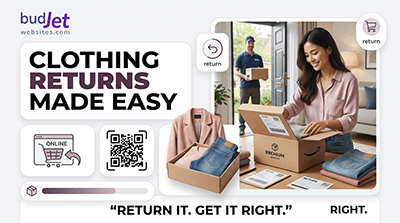
Why Clothing Return Policies Matter for Online Shoppers
Buying clothes online offers convenience, variety, and access to thousands of products from different brands. However, sometimes the product you receive may not match your expectations. The size may not fit correctly, the color may look different, or the item may arrive damaged.
This is where understanding a clothing return policy becomes important.
A return policy explains the rules customers must follow when they want to send a purchased item back to the seller. It defines which products are eligible for return, how many days customers have to request a return, refund conditions, and whether exchanges are available.
Before purchasing clothes online, reading the retailer's return policy can help you make better decisions and avoid unexpected issues.
At Budjet Websites, we encourage online shoppers and ecommerce businesses to understand return policies before making a purchase, as clear return guidelines help build trust, improve customer satisfaction, and create a more confident shopping experience.
Table of Contents
What Is a Clothing Return Policy?
A clothing return policy is a set of rules created by an online retailer that explains how customers can return clothing items after purchase.
The policy provides information about:
- Return time limits
- Product eligibility
- Required product condition
- Refund process
- Exchange options
- Return shipping charges
- Non-returnable products
Every fashion retailer has different policies. Some stores provide easy doorstep returns, while others may require customers to arrange shipping themselves.
Understanding these rules helps customers know their rights and responsibilities when shopping online.
Why Is a Return Policy Important?
A clear return policy benefits both customers and retailers.
For shoppers, it provides confidence when purchasing clothes online because they know what happens if the product does not meet expectations.
For retailers, return policies help manage product quality, prevent misuse, and create a consistent process for handling customer requests.
A good return policy answers important questions such as:
- Can I return this product?
- How many days do I have?
- Will I receive a refund or replacement?
- Are return charges applicable?
- What condition should the product be in?
Without understanding these details, customers may face rejected return requests or delayed refunds.
Important Elements of a Clothing Return Policy
Every return policy for online stores usually contains several important sections. Understanding these terms makes online shopping easier.
1. Return Period
The return period defines how long customers have to request a return after receiving their order.
Common return windows include:
- 7 days
- 15 days
- 30 days
Some retailers calculate the return period from:
- Delivery date
- Order date
- Invoice date ---> Always check the exact timeline mentioned by the retailer.
2. Product Eligibility
Not every clothing item is automatically eligible for return. Retailers may have specific rules about which products can be returned.
Common eligible items:
- Shirts
- Dresses
- Jeans
- Jackets
- T-shirts
- Accessories (depending on policy)
Products that may have restrictions:
- Innerwear
- Customized clothing
- Personalized items
- Clearance products
- Final-sale products ---> Checking eligibility before purchase prevents disappointment later.
3. Product Condition Requirements
Most retailers require returned clothing to be in its original condition.
A product usually needs to be:
- Unused
- Unwashed
- Undamaged
- With original tags attached
- With original packaging --> Items showing signs of use may not qualify for a refund or exchange.
For example, a customer who removes tags, washes a shirt, and then requests a return may have their request rejected.
4. Return Request Process
A typical return request process includes:
- Logging into your shopping account.
- Opening your order history.
- Selecting the product.
- Choosing a return reason.
- Scheduling pickup or shipping the product.
- Tracking the return status.
The exact process differs between websites, but most follow similar steps.
Understanding the online shopping return rules makes the process faster and easier.
5. Refund Rules
A return policy usually explains how refunds are processed.
Important refund details include:
- Refund method
- Refund timeline
- Processing charges
- Shipping fee adjustments
Refunds are generally issued after the seller receives and inspects the returned product.
Depending on the payment method, refunds may be credited to:
- Bank account
- Credit card
- Debit card
- UPI account
- Digital wallet
- Store credit
Return and Exchange Policy: What Is the Difference?
A return and exchange policy explains both options customers have when they are unhappy with a purchase.
Although they are related, returns and exchanges serve different purposes.
|
Feature |
Return |
Exchange |
|
Purpose |
Get money back |
Replace product |
|
Best for |
Unwanted or defective items |
Different size or color |
|
Payment refunded |
Yes |
Usually no |
|
Replacement provided |
No |
Yes |
|
Depends on stock |
No |
Yes |
Choose a return when you no longer want the product.
Choose an exchange when you still want the item but need another version.
Understanding Return Shipping Charges
One important part of a fashion return policy is knowing who pays for return shipping.
Different retailers handle shipping costs differently
Common possibilities include:
Free Return Pickup
The brand arranges pickup without charging the customer.
Customer-Paid Return Shipping
The customer pays courier charges to send the product back.
Refund Deduction
The retailer deducts return shipping charges from the refund amount.
Always check this information before placing an order, especially for expensive clothing purchases.
Common Clothing Return Policy Mistakes to Avoid
Many customers face problems during returns because they overlook important rules. Understanding these common mistakes can make the return process easier.
1. Not Reading the Return Policy Before Buying
One of the biggest mistakes shoppers make is purchasing products without checking the retailer's policy.
Different brands have different rules regarding:
- Return deadlines
- Exchange availability
- Refund methods
- Non-returnable products
- Return charges ---> Always review the policy before completing your purchase.
2. Removing Tags Immediately
Many customers remove labels as soon as they receive their clothes.
However, most retailers require original tags to be attached during returns.
Keep all tags and packaging until you decide to keep the product.
3. Missing the Return Deadline
Every retailer provides a specific period for requesting returns.
Waiting too long can result in automatic rejection.
After receiving your order:
- Check the product immediately.
- Try the item carefully.
- Request a return quickly if needed.
4. Returning Used or Washed Clothes
Most online stores only accept unused products.
Returns may be rejected if the item has:
- Washing marks
- Stains
- Alterations
- Strong fragrance
- Visible wear
Always inspect clothing before using it.
5. Ignoring Product Restrictions
Some products may have special return conditions.
Examples include:
- Innerwear
- Personalized clothing
- Custom designs
- Clearance items
- Final-sale products
Checking product eligibility before ordering helps avoid problems.
How to Check a Return Policy Before Shopping Online
A good return policy for online stores should be easy to understand and clearly explain customer responsibilities.
Before buying clothes online, check these important points:
Return Timeframe
Look for the number of days allowed for returns.
Ask:
- Is the return period counted from delivery?
- Is there an extended return period during sales?
- Are holiday purchases treated differently?
Refund Method
Understand where your refund will be sent.
Check whether the retailer offers:
- Original payment refund
- Bank transfer
- Wallet credit
- Store credit
Also check how long refund processing takes.
Exchange Availability
Some stores offer only refunds, while others provide exchanges.
If you frequently face size issues, choose retailers that provide easy exchange options.
Return Pickup Options
Convenient return options improve the shopping experience.
Look for:
- Free doorstep pickup
- Courier partnerships
- Easy drop-off locations
How Return Policies Affect Online Shopping Decisions
A flexible return policy can influence whether customers decide to purchase from a website.
When buying clothes online, customers cannot physically check:
- Fabric quality
- Exact color
- Fitting
- Material feel
A reliable return policy reduces this uncertainty.
Many shoppers prefer websites that offer:
- Clear return rules
- Simple exchange processes
- Fast refunds
- Transparent conditions
A customer-friendly policy can increase trust and encourage repeat purchases.
Tips for a Smooth Online Clothing Return Experience
Following these tips can make returns faster and easier.
Check Size Information Carefully
Incorrect sizing is one of the most common reasons for clothing returns.
1. Before ordering:
-
- Review size charts.
- Compare measurements.
- Read customer reviews.
- Check fit descriptions. --->This helps reduce unnecessary returns.
2. Take Product Photos
If your item arrives damaged or incorrect, take photos immediately.
Capture:
- Product condition
- Packaging
- Shipping label
- Visible defects ---> These images can help resolve disputes with customer support.
3. Save Return Details
Keep records of:
- Return request number
- Pickup confirmation
- Courier receipt
- Tracking details
- Refund confirmation ---> These details are useful if delays occur.
4. Avoid Last-Minute Returns
Do not wait until the final day to request a return.
Early action gives enough time for:
- Approval
- Pickup scheduling
- Product inspection
- Refund processing
Conclusion
Understanding a clothing return policy is an important part of successful online fashion shopping. A clear understanding of return rules helps customers avoid mistakes, choose better products, and handle problems more confidently.
Before purchasing clothes online, always review the retailer's return and exchange policy, check product eligibility, and understand refund conditions.
A good return experience depends on preparation. Keeping tags attached, following return instructions, and submitting requests within the allowed timeframe can make the process faster and smoother.
Whether you are shopping for everyday clothing or premium fashion products, knowing how return policies work allows you to shop online with greater confidence.