
Starting a clothing brand or placing an order with a garment manufacturer requires a clear understanding of production expenses. The garment manufacturing cost in India depends on fabric quality, garment design, order quantity, labour, finishing and packaging requirements.
Calculating these expenses before production helps clothing brands compare suppliers, plan budgets and set suitable selling prices.
This article explains the main cost components, how to calculate the cost per garment and what to check before confirming a manufacturing order.
1. What Is Garment Manufacturing Cost?
Garment manufacturing cost is the total expense involved in converting raw materials into finished clothing products.
Depending on the manufacturer's quotation, it may include materials, cutting, stitching, finishing, quality inspection and packaging. Other expenses, such as transportation, taxes, design development and sampling, may be charged separately.
Always check what the quotation includes before comparing manufacturers.
2. Main Factors That Affect Garment Manufacturing Cost
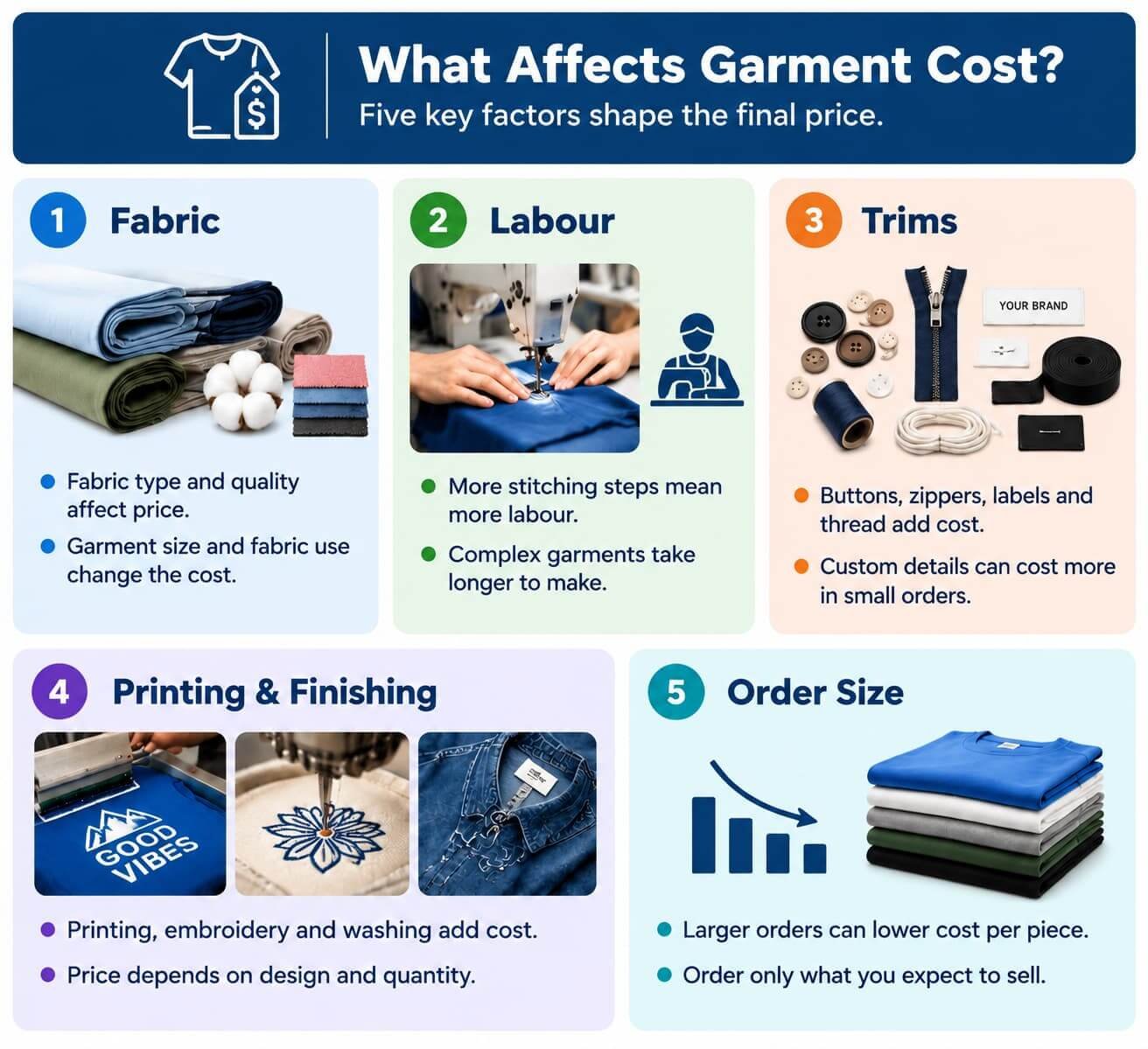
Several factors influence the final production cost of a garment.
1. Fabric Quality and Consumption
Fabric is often a significant component of garment cost. Premium cotton, specialised knits, blended materials and performance fabrics may have different prices.
The amount required also varies according to garment size, pattern, design and fabric width.
2. Stitching and Labour
Stitching costs depend on the number of operations, construction complexity, finishing requirements and production efficiency.
A basic T-shirt generally requires a different amount of labour than a structured shirt, lined jacket or detailed dress.
3. Trims and Accessories
Buttons, zippers, labels, elastic, drawstrings, thread and other accessories contribute to the total cost.
Custom labels and specialised accessories may increase the cost of smaller production runs.
4. Printing, Embroidery and Finishing
Screen printing, digital printing, embroidery, washing and other finishing processes may add to the manufacturing cost.
The final amount depends on the design, technique, quantity and supplier's rates.
5. Order Quantity
Larger orders may reduce the per-unit cost of certain activities because setup and production expenses can be distributed across more garments.
However, placing a large order only makes sense when expected demand supports the inventory investment.
3. How to Calculate Garment Manufacturing Cost
Use this basic formula:
Total manufacturing cost = Material cost + Labour cost + Processing cost + Finishing cost + Packaging cost + Other applicable production expenses
To calculate the cost per garment:
Cost per garment = Total manufacturing cost ÷ Number of garments produced
For example, consider a hypothetical order of 500 cotton T-shirts.
| Cost component | Cost per garment |
| Fabric | ₹80 |
| Trims and labels | ₹10 |
| Cutting and stitching | ₹45 |
| Printing | ₹20 |
| Finishing and quality inspection | ₹10 |
| Packaging | ₹10 |
| Total | ₹175 |
For 500 garments:
₹175 × 500 = ₹87,500 total manufacturing cost
4. Calculate Fabric Cost Per Garment
To estimate fabric expenses, determine the quantity of fabric required for one garment and multiply it by the purchase cost per unit.
Fabric cost per garment = Fabric consumption per garment × Fabric cost per unit
For example, if one garment requires 0.25 kg of fabric and the fabric costs ₹320 per kg:
0.25 × ₹320 = ₹80 per garment
For fabrics purchased by the metre, calculate consumption and price using the same unit.
Include a realistic allowance for cutting waste and fabric defects where applicable.
5. Include Fabric Wastage and Rejection Costs
Not all purchased fabric becomes part of a finished garment. Some material may be lost during cutting, while defects or production errors can affect usable output.
A simple planning formula is:
Required fabric = Net fabric requirement × (1 + Wastage rate)
For example, if the net requirement is 100 kg and the estimated wastage allowance is 8%:
100 × 1.08 = 108 kg
This is a planning estimate. Actual fabric requirements depend on marker efficiency, garment patterns, fabric defects and cutting methods.
Also consider rejected garments and rework when calculating the cost of saleable units.
6. Understand Labour and Stitching Costs
Labour costs vary according to garment construction, production time and the manufacturer's pricing model.
Ask the supplier whether the stitching quotation includes:
-
- Cutting and preparation
- Sewing and assembly
- Thread and basic consumables
- Pressing and finishing
- Quality checks
- Rework for manufacturing defects
Some manufacturers quote stitching separately from fabric and trims, while others offer a complete manufacturing rate.
7. Compare Small-Batch and Bulk Manufacturing
Order quantity affects both the unit cost and the total amount of money tied up in production.
|
Factor |
Small-batch production |
Bulk production |
|
Initial investment |
Generally lower |
Generally higher |
|
Cost per unit |
May be higher |
May be lower |
|
Design flexibility |
Often easier |
Depends on production setup |
|
Inventory risk |
Lower quantities at risk |
More stock to manage |
|
Supplier minimums |
May require negotiation |
Often better suited to minimum order quantities |
8. Account for Additional Manufacturing Expenses
A manufacturer's quoted production rate may not represent the full cost of getting a product ready for sale.
Check whether you need to budget separately for:
-
- Sample development and revisions
- Pattern making and grading
- Fabric testing
- Custom labels and packaging
- Freight and local transportation
- Applicable taxes and duties
- Third-party inspection
- Warehousing and inventory handling
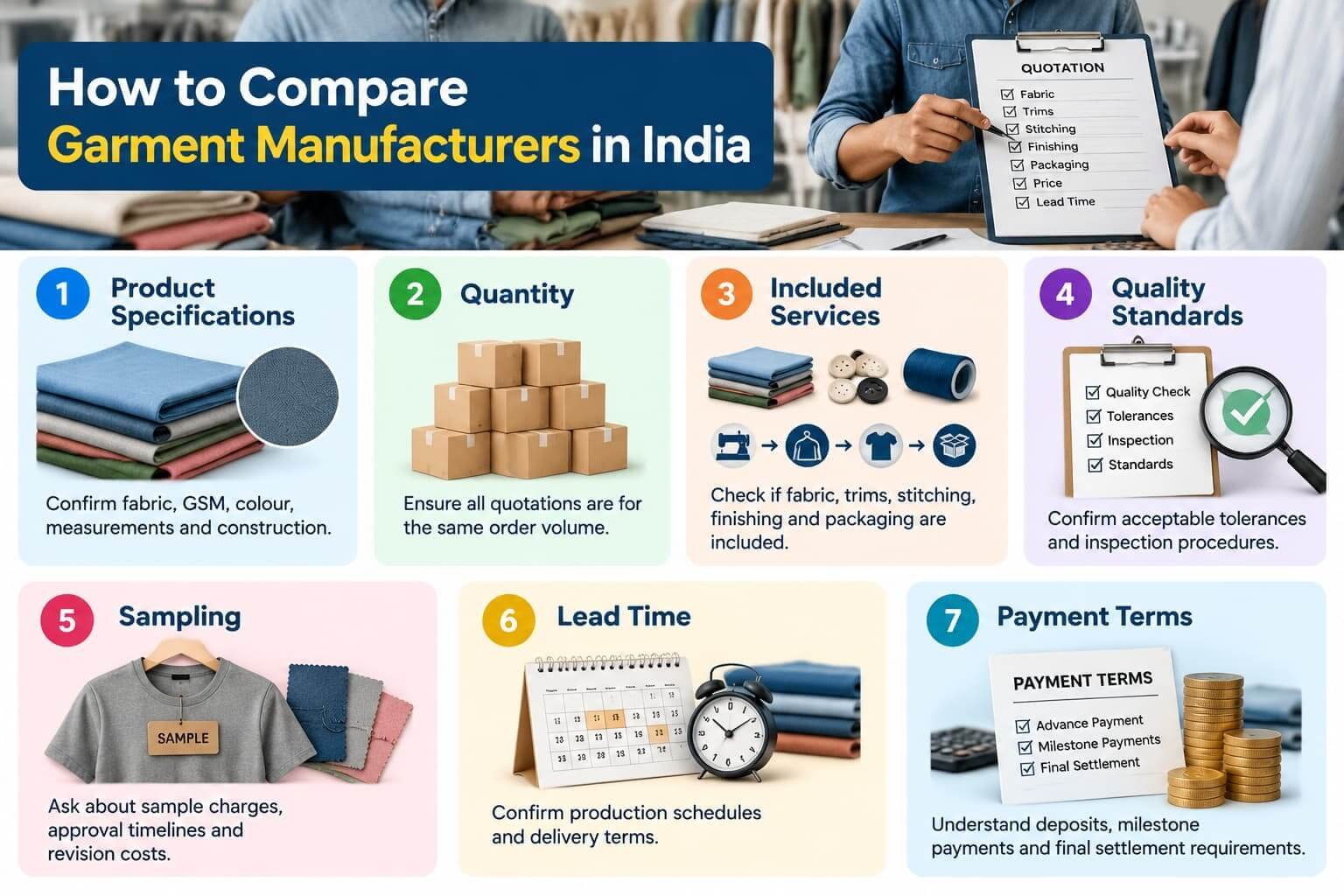
How to Compare Garment Manufacturers in India
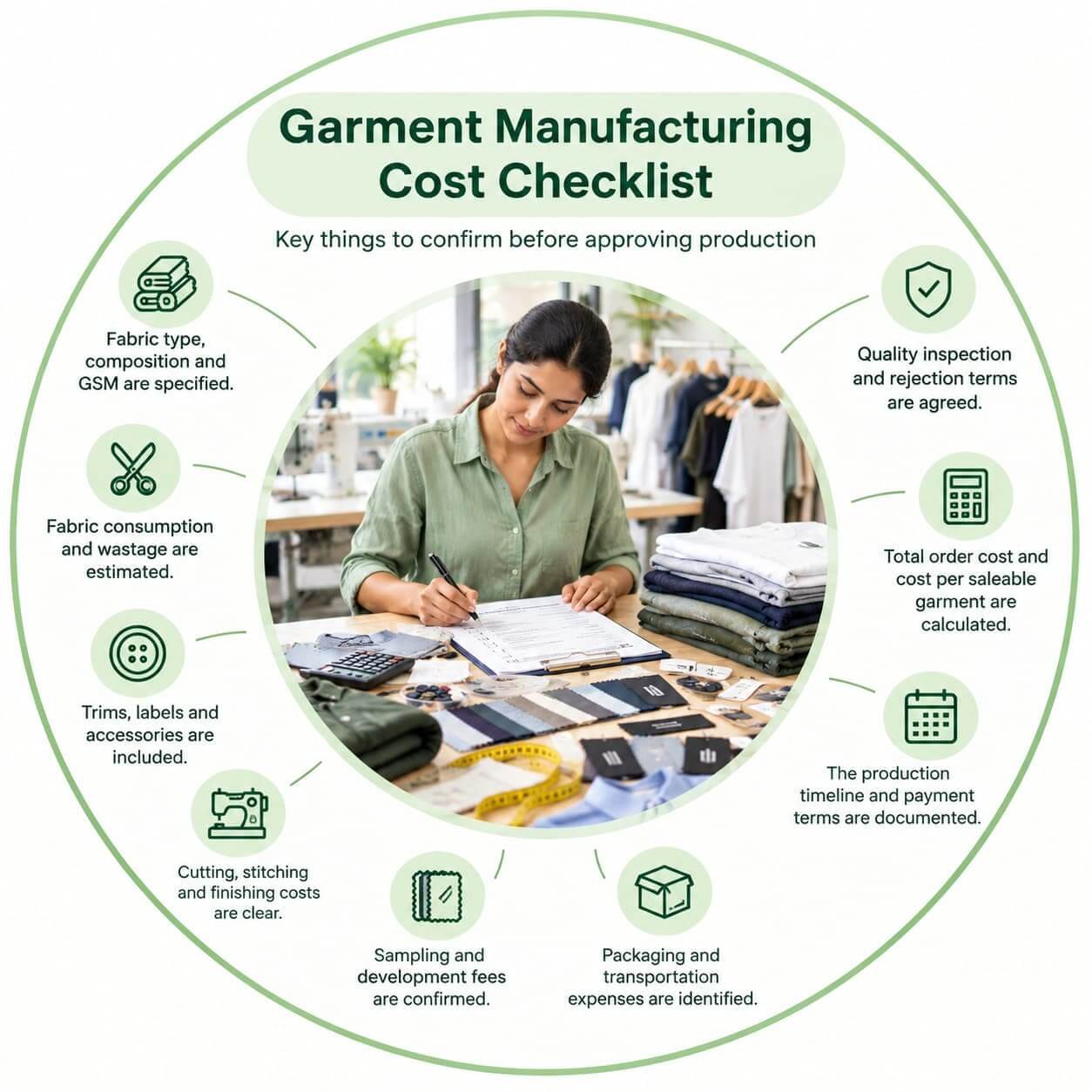
Garment Manufacturing Cost Checklist
Conclusion
Calculating garment manufacturing cost in India helps clothing brands understand production expenses before committing to an order. Include fabric, trims, labour, finishing, wastage and other applicable charges to develop a realistic cost per garment.
With accurate costing and clear supplier quotations, you can make better production decisions, plan your budget and establish retail prices that support your business goals.
Build a Professional Website for Your Clothing Business
Once your production costs are clear, your website can help you present your products, communicate their value and reach potential customers.
Budjet Websites helps businesses build professional WordPress websites with product pages, mobile-friendly layouts and e-commerce functionality.
For clothing brands, a well-structured online store can showcase collections, display product details and provide a convenient shopping experience.
Visit Budjet Websites to explore website development services for your business.
Frequently Asked Questions
1. How much does garment manufacturing cost in India?
There is no single price for all garments. Costs vary according to fabric, design, labour, quantity, finishing and the services included in the supplier's quotation. Request product-specific quotations for accurate estimates.
2. What is included in garment manufacturing cost?
It may include fabric, trims, cutting, stitching, finishing, inspection and packaging. Sampling, transportation, taxes and other services may be charged separately.
3. How do I calculate the cost of producing one garment?
Add the relevant production expenses and divide the total by the number of saleable garments produced. Include wastage, rework and rejected units when appropriate.