
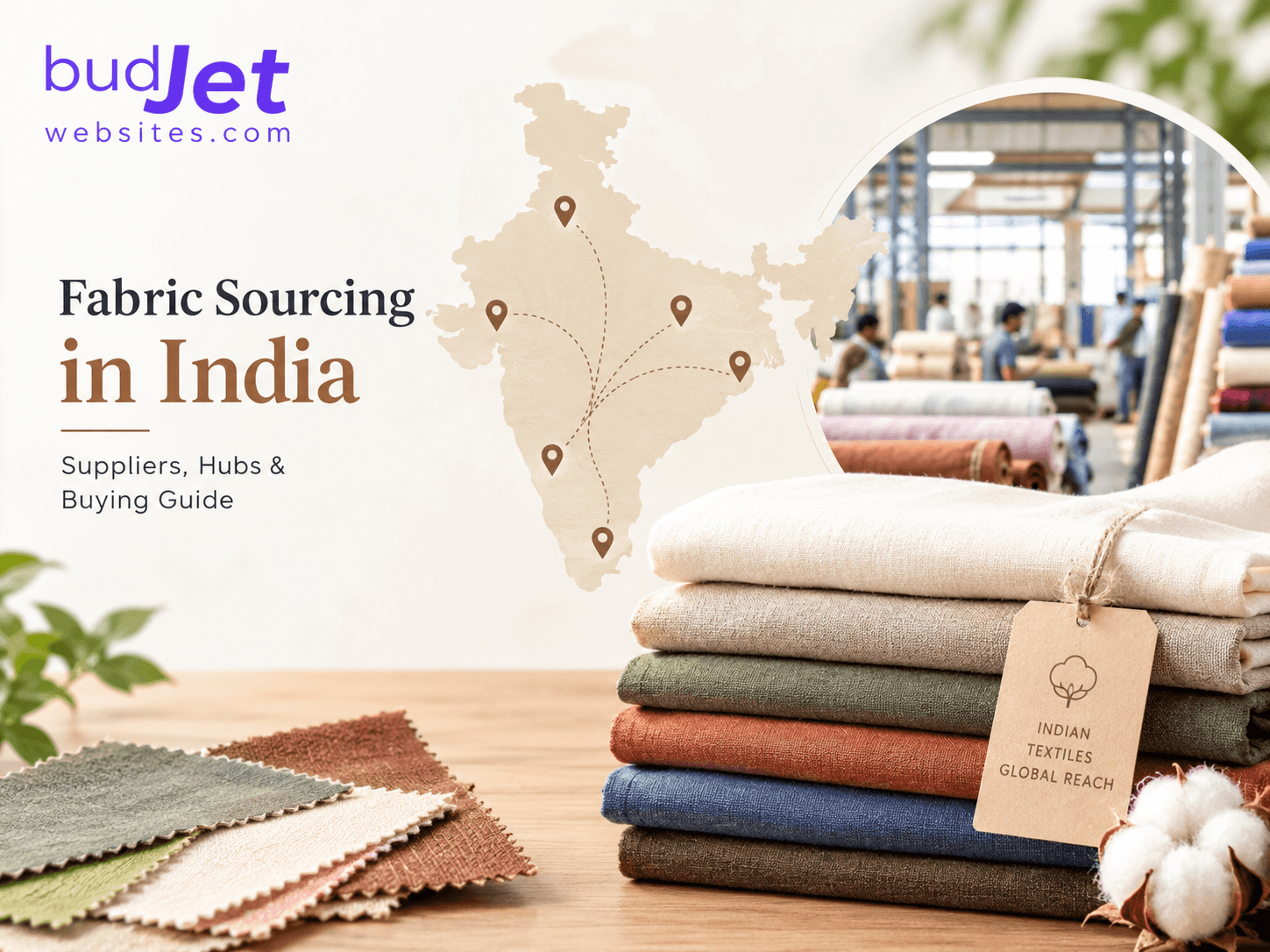
India has a well-established textile and garment manufacturing ecosystem, making it a practical sourcing destination for clothing brands of different sizes. Businesses can source cotton fabric, knitted fabrics, woven fabrics, blended materials and other textiles for everything from T-shirts and casual wear to activewear, dresses and private-label clothing.
For a new clothing brand, finding reliable fabric suppliers in India is about more than choosing the lowest price. The fabric needs to match the garment's design, target customers and expected quality. Factors such as fabric GSM, composition, width, colour, texture, finish, shrinkage and durability can affect the final product.
Brands should also consider the supplier's MOQ, sample availability, production capacity, lead time, payment terms, location and delivery costs. Comparing these factors before placing a bulk order can help reduce sourcing risks and make it easier to maintain consistent fabric quality as the clothing business grows.
Whether you are starting a small clothing brand or planning larger production, understanding India's major textile hubs and knowing how to evaluate fabric suppliers can help you make more informed sourcing decisions.
Why Choose Fabric Suppliers in India?
India offers clothing businesses several sourcing options, from textile manufacturers and wholesalers to garment factories and specialised suppliers.
Local sourcing can help brands:
🧶 Find different types of cotton fabric
🏭 Compare multiple fabric suppliers
🔍 Request physical samples
⚖️ Test fabric GSM and quality
📦 Start with smaller production quantities
🤝 Communicate directly with manufacturers
✨ Develop customised fabrics or garments
Major Fabric Sourcing Hubs in India
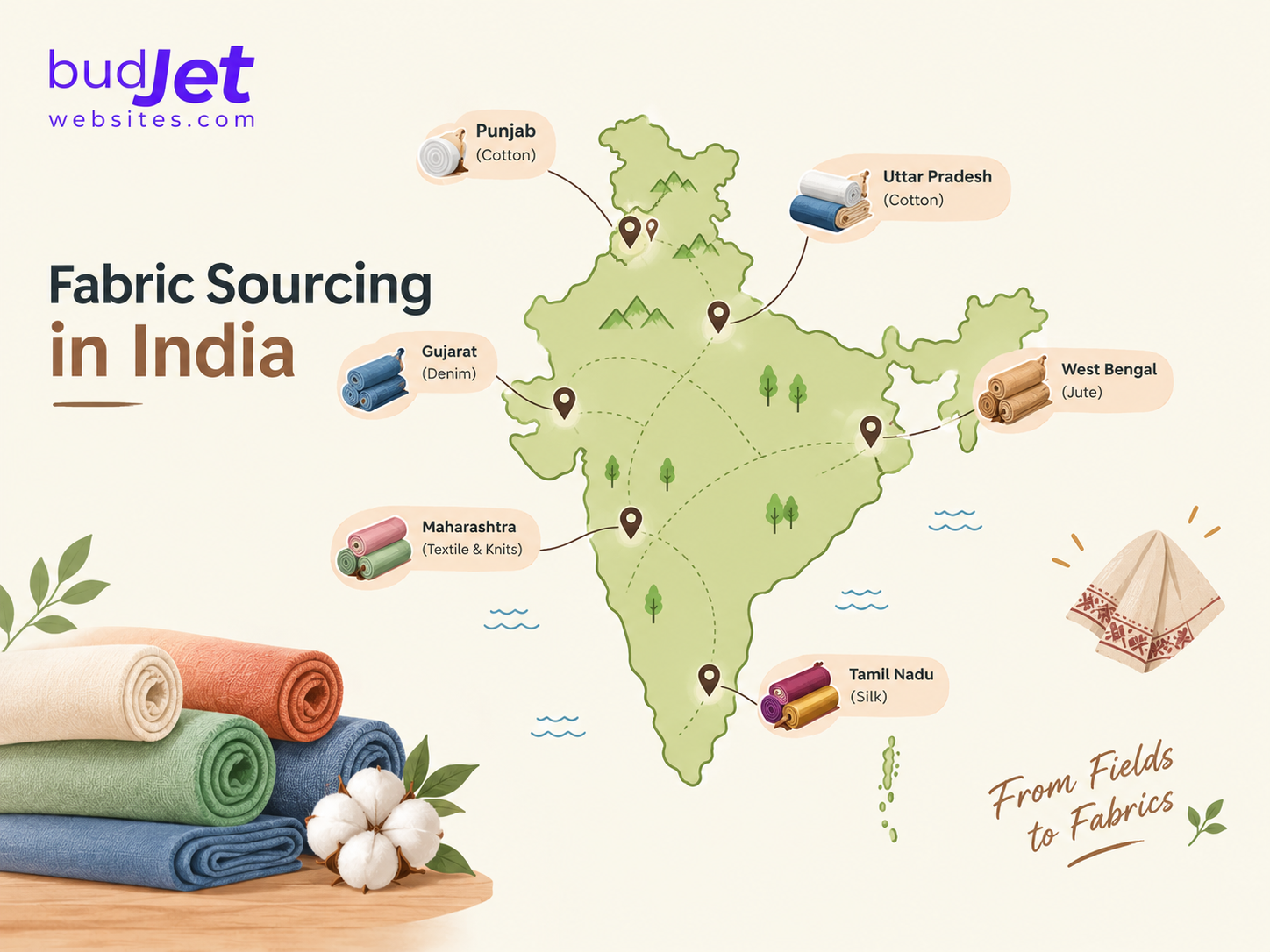
| Sourcing Hub | Known For |
| 🧵 Tiruppur, Tamil Nadu | Knitted garments, T-shirts, activewear and cotton apparel |
| 🧶 Coimbatore, Tamil Nadu | Spinning, yarn and textile production |
| 🎨 Surat, Gujarat | Synthetic fabrics, sarees, dress materials and textile trading |
| 🏭 Ahmedabad, Gujarat | Cotton textiles and fabric manufacturing |
| 👕 Bengaluru, Karnataka | Apparel manufacturing and fashion supply chains |
| 🧥 Ludhiana, Punjab | Knitwear, sweaters and winter clothing |
How to Find Fabric Suppliers in India
You can find fabric suppliers in India through several channels:
🛍️ Textile markets
📋 Manufacturer directories
🎪 Trade exhibitions
🏢 Local textile associations
💻 B2B platforms
📞 Direct manufacturer enquiries
🤝 Garment manufacturer referrals
When contacting a supplier, clearly explain your requirements for fabric GSM, composition, colour, quantity, finish and intended garment.
This makes it easier for suppliers to provide relevant samples and quotations.
Ask for Fabric Samples Before Ordering
Never depend only on photographs or supplier descriptions when purchasing fabric for production.
Request samples and check:
-
- Fabric quality
- GSM
- Composition
- Colour
- Texture
- Shrinkage
- Colour fastness
- Stretch and recovery
- Surface defects
For important products, wash and test the sample before approving it for production.
Compare MOQ and Fabric Pricing
MOQ (Minimum Order Quantity) can vary significantly between fabric manufacturers in India and wholesalers.
Before placing an order, ask about:
-
- Minimum order quantity
- Price per metre or kilogram
- Sample charges
- Dyeing charges
- Printing charges
- Delivery time
- Payment terms
- GST and applicable taxes
Don't select a supplier based only on the lowest quoted price.
🧮 Calculate Your Total Sourcing Cost
Fabric Price + Processing + Transportation + Packaging + Applicable Taxes = Total Sourcing Cost
This gives you a more realistic comparison between suppliers.
Fabric Sourcing for Small Clothing Brands
Small clothing businesses should avoid committing to large quantities before testing their products.
A practical sourcing process is:
🔎 Supplier Research → 🧪 Sample → 🧵 Fabric Testing → 👕 Small Production Run → 💬 Customer Feedback → 📦 Larger Order
This approach can reduce the risk of investing heavily in fabric that doesn't meet your quality requirements or customer expectations.
For startups, finding reliable cotton fabric suppliers that can support smaller quantities may be more useful than simply choosing the cheapest supplier.
Work With an Indian Garment Manufacturer
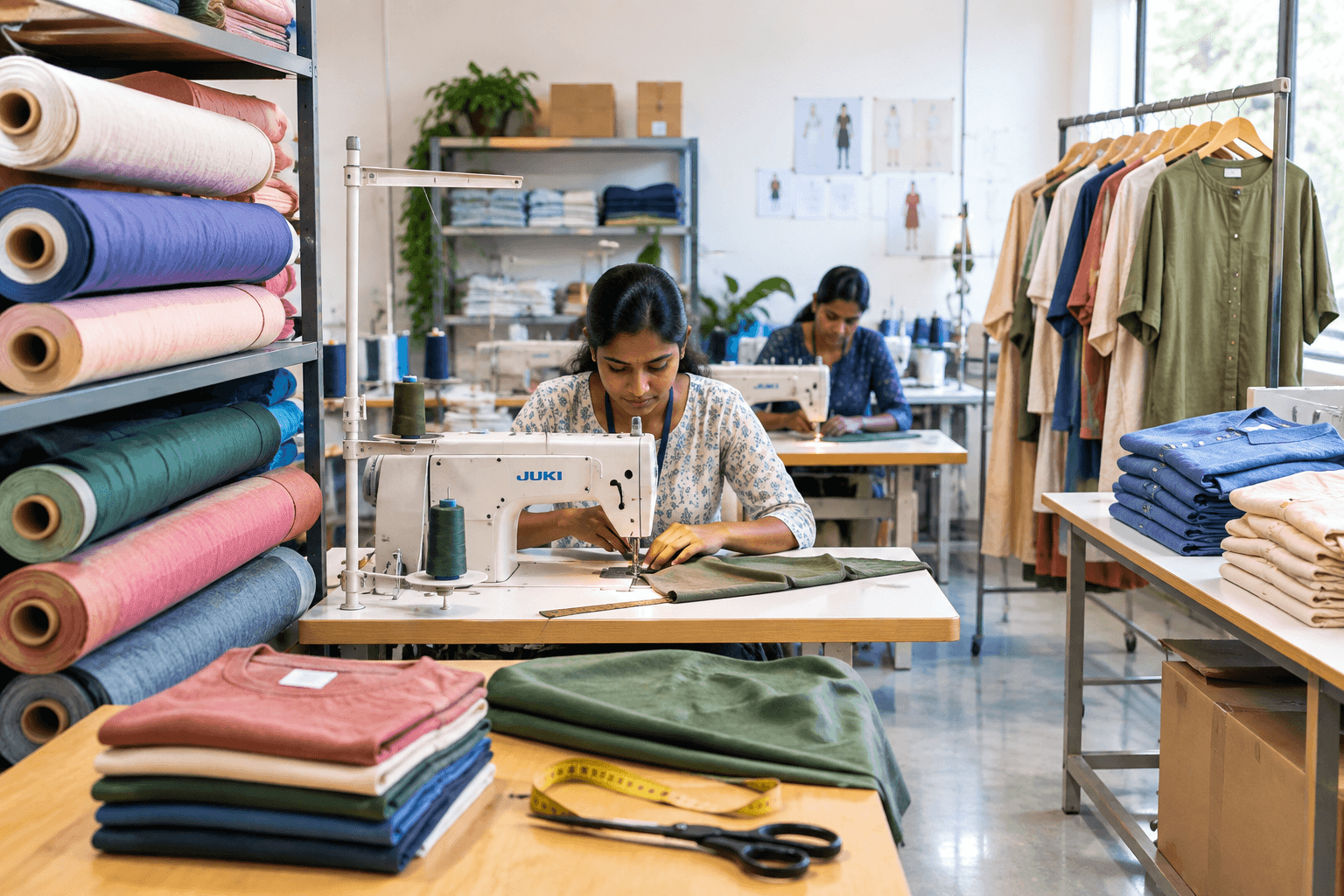
Instead of sourcing fabric separately, you can also work with a garment manufacturer in India that handles fabric sourcing and clothing production.
Before selecting a manufacturer, ask about:
-
- Fabric sourcing
- Fabric GSM
- Garment quality
- MOQ
- Sampling
- Production capacity
- Lead time
- Quality control
- Packaging
- Private-label clothing services
Make sure the agreed fabric specifications are documented before production begins.
How to Choose the Right Fabric Supplier
Before making your final decision, compare suppliers based on more than price.
Consider:
🧵 Fabric Quality → ⚖️ GSM Accuracy → 📦 MOQ → 💰 Price → 🚚 Lead Time → 🤝 Reliability → 🔍 Quality Control
A supplier offering slightly higher prices may still be a better choice if they provide consistent quality, reliable delivery and suitable MOQs.
Fabric Sourcing Checklist for Clothing Businesses
Before placing a bulk order, confirm:
-
-
-
Fabric composition
-
Fabric GSM
-
Fabric width
-
Colour and shade
-
Fabric finish
-
Shrinkage
-
Colour fastness
-
MOQ
-
Price
-
Sample approval
-
Delivery timeline
-
Payment terms
-
GST and applicable taxes
-
Quality-control requ
-
-
Conclusion
Successful fabric sourcing in India requires balancing quality, price, MOQ, supplier reliability and production needs. For a new clothing brand, comparing suppliers only on price can lead to quality and delivery issues later.
Whether you need cotton fabric suppliers, knitted fabrics, woven materials or garment manufacturers, always request samples and verify GSM, composition, colour, finish, shrinkage and other key specifications before placing a bulk order.
Once the sample is approved, clearly document the agreed fabric specifications, price, MOQ, payment terms and delivery timeline. A careful sourcing process can help your clothing brand control costs, maintain consistent quality and build reliable supplier relationships for future production.