
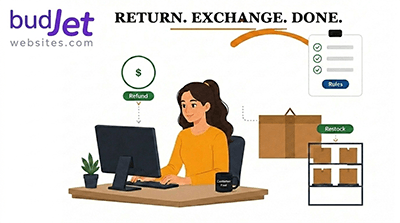
Understanding the Online Clothing Return Process
Online shopping has transformed the way people buy clothes, offering convenience, a wide variety of styles, and access to brands from around the world. However, not every purchase turns out as expected. A dress may not fit properly, the color might differ from the product images, or the item could arrive damaged or incorrect.
Knowing how to return clothes online can save you time, money, and frustration. Most fashion retailers provide return and exchange services, but every store has its own policies regarding eligibility, timelines, packaging, and refunds. Understanding these rules before starting a return request can help you avoid delays or rejected claims.
Whether you're shopping from a fashion marketplace or a brand's official website, learning the online clothing return process makes online shopping more confident and stress-free.
Budjet Websites helps ecommerce brands improve their online presence through SEO, website optimization, and customer experience strategies.
In this comprehensive guide, you'll learn:
- How online clothing returns work
- Step-by-step instructions for returning clothes
- How to exchange clothing online
- How refunds are processed
- Common mistakes to avoid
- Practical tips for a successful return
Let's get started.
"How to Return Clothes Online: Step-by-Step Process"
🛒 Customer Receives Clothes
|
↓
🔍 Check Product Condition
|
↓
📄 Read Return Policy
|
↓
📱 Submit Return Request
|
↓
🚚 Schedule Pickup / Ship Item
|
↓
📦 Seller Receives Product
|
↓
✅ Quality Inspection
|
┌─────────┴─────────┐
↓ ↓
Refund Issued Exchange Sent
|
↓
💰 Money Received
What Is an Online Clothing Return?
An online clothing return is the process of sending a purchased clothing item back to the seller after delivery. Customers typically request a return when the product doesn't meet their expectations or cannot be used.
Unlike shopping in a physical store, online purchases rely on product descriptions and images. As a result, returns are a normal part of e-commerce, and most fashion retailers have established clear return procedures.
Common Reasons for Returning Clothes
Customers return clothing for many reasons, including:
- Incorrect size or poor fit
- Wrong color or design
- Product looks different from website images
- Damaged or defective item
- Wrong item delivered
- Fabric or quality concerns
- Missing accessories
- Change of mind (where allowed)
Although returns are common, approval depends on the store's clothing return policy.
What Should You Check Before Requesting a Return?
Before submitting a return request, carefully review the retailer's policy to understand the conditions.
Check the following:
- Return eligibility period (7, 15, or 30 days)
- Product condition requirements
- Original tags and packaging requirements
- Return shipping charges
- Exchange availability
- Refund method
- Non-returnable product categories
Reading these details beforehand helps prevent unnecessary delays and rejected requests.
Understanding a Clothing Return Policy
Every online retailer has its own clothing return policy, which outlines how customers can return products and under what conditions.
A standard return policy generally explains:
- How many days customers have to request a return
- Which products are eligible
- Which products cannot be returned
- Whether return shipping is free or paid
- Refund timelines
- Exchange options
- Conditions for damaged or defective items
For example, some stores provide free doorstep pickup, while others require customers to ship the product themselves. Certain items, such as innerwear, customized clothing, beauty products, or final-sale items, may not be eligible for returns.
Taking a few minutes to read the policy before placing an order can help avoid surprises later.
How to Return Clothes Online: Step-by-Step Process
Returning clothes online is usually straightforward when you follow the correct process. Although the exact steps may differ slightly between retailers, most stores follow a similar workflow.
Step 1: Review the Store's Return Policy
The first and most important step is reading the store's return policy.
Pay close attention to:
- Return deadline
- Product eligibility
- Packaging requirements
- Refund conditions
- Exchange availability
- Return shipping fees
Some stores allow returns within 30 days, while others offer only a 7-day return window. Waiting too long can make your item ineligible.
If you're unsure about any condition, contact customer support before initiating the return.
Step 2: Inspect the Product Carefully
Before requesting a return, inspect the item thoroughly.
Check for:
- Fabric quality
- Stitching defects
- Missing accessories
- Wrong color
- Incorrect size
- Damage during shipping
If you receive a damaged or incorrect product, take clear photographs immediately. These images can serve as evidence if customer support requests proof.
Avoid washing, ironing, or wearing the clothing before inspection, as signs of use may affect return eligibility.
Step 3: Log Into Your Shopping Account
Most online stores allow customers to initiate returns directly through their website or mobile app.
Generally, you'll need to:
- Sign in to your account.
- Open My Orders.
- Select the relevant order.
- Click Return Item or Request Return.
If you placed your order as a guest, you'll usually need:
- Order number
- Registered email address
- Mobile number (if applicable)
Having these details ready speeds up the process.
Step 4: Select the Correct Reason for Return
Retailers ask customers to choose a reason for returning the item. Providing accurate information helps customer support process your request efficiently and allows brands to improve their products.
Common return reasons include:
- Size too small
- Size too large
- Color different from images
- Product damaged
- Wrong item received
- Poor quality
- Product not as expected
- Missing accessories
If there is visible damage, include photos whenever the platform allows file uploads.
Step 5: Choose Your Preferred Return Method
Most fashion retailers offer one or more return options.
Doorstep Pickup
A courier partner collects the package from your address on a scheduled date.
Courier Drop-Off
You drop the parcel at an authorized courier location.
Self-Shipping
Some retailers ask customers to arrange shipping themselves and upload the tracking information. In eligible cases, shipping costs may be reimbursed according to the store's policy.
Choose the option that is most convenient while ensuring you follow the retailer's instructions.
Step 6: Pack the Item Properly
Proper packaging protects the product during transit and increases the likelihood of a successful return.
Before sealing the package:
- Fold the clothing neatly.
- Attach all original tags.
- Include accessories received with the product.
- Place the item in its original packaging if available.
- Add the invoice or return slip if required.
Avoid sending back products that have:
- Been washed
- Been altered
- Strong perfume or deodorant odors
- Visible stains
- Torn packaging caused by misuse
Retailers may reject returns if the product does not meet their condition requirements.
Step 7: Hand Over the Package
If you've scheduled a pickup, hand the package to the delivery agent and request proof of collection if available.
For self-shipping or courier drop-off:
- Save the shipping receipt.
- Note the tracking number.
- Keep a copy of the return confirmation email.
These documents can be valuable if your package is delayed or lost during transit.
Step 8: Track Your Return Status
After your package is shipped, monitor the return status through your account.
Most retailers update customers as the return progresses through stages such as:
- Return request submitted
- Request approved
- Pickup completed
- Package in transit
- Product received
- Quality inspection
- Refund approved
- Refund processed
Tracking updates keep you informed and help you know when to expect your refund or replacement.
What Happens After the Seller Receives Your Return?
Once the returned item reaches the seller's warehouse, it goes through a quality inspection.
During this process, the retailer verifies that:
- The correct product was returned.
- Original tags are attached.
- The item hasn't been used or damaged.
- Accessories are included.
- The return complies with the store's policy.
If the product passes inspection, the seller approves the return and begins the refund process for online shopping or ships the replacement item if you requested an exchange.
If the inspection fails—for example, because the item was worn, washed, or returned outside the allowed period—the retailer may reject the request and send the product back to you.
Understanding this inspection stage helps set realistic expectations and highlights why following the return instructions carefully is so important.
How to Exchange Clothes Online
Sometimes, returning a product isn't the best option. If you're happy with the quality but need a different size, color, or replacement, requesting an exchange can be quicker and more convenient than asking for a refund and placing a new order.
Understanding how to exchange clothes online helps you get the right product with minimal hassle.
Although exchange policies differ between retailers, the process is generally straightforward.
Step 1: Check Whether Exchanges Are Available
Not every online store offers exchanges. Some brands only allow returns and require customers to place a new order after receiving a refund.
Before requesting an exchange, verify:
- Whether exchanges are supported
- Eligible products for exchange
- Available sizes or colors
- Exchange request deadline
- Whether additional charges apply
If exchanges are unavailable, you'll need to return the item and purchase the desired product separately.
Step 2: Request an Exchange
Log in to your shopping account and navigate to My Orders.
Select the product you wish to exchange and choose the Exchange option instead of Return.
Most retailers will ask you to provide:
- Reason for exchange
- Preferred size
- Preferred color
- Replacement product (if applicable)
Providing accurate details helps prevent delays
Step 3: Wait for Pickup
In many cases, the retailer arranges a pickup for the original item before shipping the replacement.
Ensure the clothing is:
- Unused
- Clean
- Folded properly
- Packed securely
- Returned with original tags and accessories
The pickup process is often identical to the standard online order return process.
Step 4: Receive Your Replacement
After the warehouse approves the returned item, the replacement order is processed.
You'll typically receive:
- Confirmation email
- Shipment notification
- Tracking details
- Estimated delivery date
Delivery times vary depending on stock availability and your location.
Return vs Exchange: What's the Difference?
Many shoppers confuse returns and exchanges, but they serve different purposes.
Feature
| Purpose |
| Money Returned |
| Product Replacement |
| Best For |
| Requires New Purchase |
| Processing Time |
Return
|
Receive a refund |
|
Yes |
|
No |
|
Wrong product, poor quality, change of mind |
|
Sometimes |
|
Depends on refund method |
Exchange
|
Replace the product |
|
No |
|
Yes |
|
Incorrect size or color |
|
Usually No |
|
Depends on stock availability |
When Should You Choose a Return?
-
A return is generally the better option when:
- The product is damaged.
- The quality is unsatisfactory.
- You received the wrong item.
- You no longer want the product.
- The replacement is unavailable.
When Should You Choose an Exchange?
An exchange is usually more suitable if:
- You need a different size.
- You prefer another color.
- The item arrived defective and you still want it.
- You received the wrong variant.
Choosing the right option can save both time and money.
Understanding the Refund Process for Online Shopping
One of the most common concerns after returning clothing is knowing when and how the refund will be received.
The refund process for online shopping generally begins only after the seller receives and inspects the returned product.
How Refunds Are Processed
Most retailers follow these steps:
- Return request approved.
- Product collected or shipped.
- Warehouse receives the parcel.
- Product inspection completed.
- Refund approved.
- Refund initiated.
- Money credited to your original payment method or store wallet.
The exact timeline depends on the retailer and payment provider.
Refund Methods
Your refund method usually depends on how you originally paid.
Payment Method
|
Credit Card |
|
Debit Card |
|
UPI |
|
Net Banking |
|
Digital Wallet |
|
Cash on Delivery |
Typical Refund Destination
|
Original credit card |
|
Original bank account |
|
Same UPI account |
|
Bank account |
|
Wallet balance |
|
Bank transfer, UPI, or store credit |
Some retailers also allow customers to choose store credit instead of a direct refund for faster processing.
How Long Does an Online Clothing Return Take?
Return timelines vary between retailers, but a typical process looks like this:
|
Stage |
Estimated Time |
|
Return Request Approval |
Within 24–48 hours |
|
Pickup Scheduling |
1–3 days |
|
Product Transit |
2–7 days |
|
Warehouse Inspection |
1–5 business days |
|
Refund Processing |
3–10 business days |
Overall, the complete process may take 7–15 business days, depending on your location, shipping method, and payment provider.
During busy shopping seasons, such as holiday sales or festival promotions, returns and refunds may take longer than usual.
Common Reasons Why Clothing Returns Are Rejected
Even if you've submitted a return request correctly, retailers may reject it if the product doesn't meet their return conditions.
Common reasons include:
1. Missing Original Tags
Many brands require all tags to remain attached.
Removing them may make the product ineligible for return.
2. Product Shows Signs of Use
Returns may be rejected if the clothing has:
- Been washed
- Been worn
- Been altered
- Has perfume or deodorant odor
- Contains stains
- Has pet hair
Always inspect the item before deciding to keep it.
3. Return Window Has Expired
Every retailer has a return deadline.
Submitting your request after the allowed period usually results in rejection.
4. Missing Accessories
Products that originally included belts, buttons, scarves, pouches, or other accessories should generally be returned with all included items.
5. Non-Returnable Products
Certain products are often excluded from returns, including:
- Innerwear
- Customized clothing
- Personalized products
- Clearance or final-sale items
- Gift cards
- Hygiene-sensitive products
Always read the retailer's policy before ordering these items.
Common Mistakes to Avoid When Returning Clothes Online
Avoiding a few common mistakes can significantly improve your chances of a successful return.
Removing Packaging Too Soon
Keep the original packaging until you're certain you'll keep the item.
Many retailers prefer or require products to be returned in their original packaging.
Waiting Too Long
Don't delay your decision.
As soon as the product arrives:
- Try it on.
- Inspect it carefully.
- Initiate a return promptly if needed.
Waiting until the last day increases the risk of missing the deadline.
Ignoring the Return Policy
Every retailer has different conditions.
Never assume that two stores have identical return rules.
Take a few minutes to review the policy before making a request.
Throwing Away the Invoice
Some retailers ask customers to include:
- Invoice
- Packing slip
- Return authorization
Keeping these documents can simplify the return process.
Expert Tips for a Smooth Clothing Return Experience
Following a few best practices can save time and help ensure your return is approved.
Check the Size Guide Before Ordering
Many clothing returns happen simply because customers choose the wrong size.
Before buying:
- Compare your measurements with the size chart.
- Read customer reviews for fit advice.
- Check whether the brand recommends sizing up or down.
Take Photos Immediately After Delivery
If the item arrives damaged or incorrect, photograph:
- Outer packaging
- Shipping label
- Product condition
- Defects or damage
- Accessories included
These photos can help resolve disputes more quickly.
Save Every Confirmation
Keep copies of:
- Return request confirmation
- Pickup confirmation
- Courier receipt
- Tracking number
- Refund confirmation email
Having this information readily available can make it easier to follow up with customer support if needed.
Monitor Your Return Status
Check your order status regularly rather than waiting for email updates.
If the tracking hasn't changed for several days, contact customer support with your order details and tracking information.
Read Product Descriptions Carefully
Many returns can be avoided by reviewing:
- Fabric composition
- Washing instructions
- Product measurements
- Fit description
- Customer reviews
- Model sizing information
Spending a few extra minutes before placing an order can reduce the likelihood of needing a return.
What Should You Do If Your Return Is Rejected?
A rejected return doesn't always mean the issue can't be resolved.
If your request is declined:
- Read the rejection reason carefully.
- Compare it with the retailer's published return policy.
- Contact customer support and explain your case politely.
- Share photos or documentation if relevant.
- Request a review if you believe the rejection was made in error.
Keeping order confirmations, tracking information, and photos of the product can make it easier to resolve disputes and reach a satisfactory outcome.
Conclusion
Online shopping offers convenience, variety, and competitive prices, but occasional returns are part of the experience. Whether you've received the wrong size, a damaged item, or simply changed your mind, understanding the online order return process allows you to resolve issues with confidence.
Before placing your next clothing order, take a few minutes to review the retailer's clothing return policy, sizing information, and exchange options. A little preparation can help you avoid common mistakes and make the entire shopping experience more enjoyable
Knowing how to exchange clothes online, track your return, and understand the refund process for online shopping empowers you to shop with greater confidence and peace of mind.
At Budjet Websites, we believe that a transparent, customer-friendly return process is essential for building trust and improving the online shopping experience. Whether you're a shopper looking to make informed purchasing decisions or an ecommerce business aiming to create a better customer journey, having a clear returns and exchanges strategy benefits everyone.
Frequently Asked Questions (FAQs)
1. How do I return clothes bought online?
To return clothes bought online, log in to your shopping account, open your order history, select the item you want to return, choose a return reason, and submit your request. Pack the item with its original tags and packaging, then hand it over to the courier or drop it off according to the retailer's instructions.
2. How long does the online clothing return process take?
The complete online clothing return process usually takes between 7 and 15 business days, including pickup, warehouse inspection, and refund processing. The exact timeline depends on the retailer, shipping method, and payment provider.
3. Can I return clothes without the original tags?
In most cases, retailers require original tags to remain attached. Removing tags may make the item ineligible for return. Always review the retailer's clothing return policy before removing labels or using the product.
4. Can I return clothes after washing or wearing them?
Generally, no. Most retailers only accept clothing that is unused, unwashed, and in its original condition with all tags attached. Items showing signs of wear, stains, or alterations are often rejected.
5. Why was my return request rejected?
Generally, no. Most retailers only accept clothing that is unused, unwashed, and in its original condition with all tags attached. Items showing signs of wear, stains, or alterations are often rejected.