
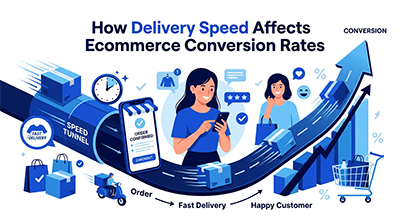
How Delivery Speed Affects Ecommerce Conversion Rates
As ecommerce continues to grow, attracting visitors to an online store is only the first step. Turning those visitors into paying customers requires a smooth purchasing experience, and shipping plays an important role in that journey.
While businesses often focus on product quality, pricing, and website design, delivery expectations have become equally important. Customers want confidence that their orders will arrive quickly, safely, and within the promised timeframe.
Delivery speed has become a major factor influencing ecommerce conversions because it directly affects customer confidence. A long or unclear delivery timeline can create hesitation, while reliable shipping options can encourage customers to complete their purchases.
This guide explains how delivery speed affects conversion rates, why shipping delivery time matters, and how businesses can optimize their shipping strategies to improve sales performance.
At Budjet Websites, we help businesses understand that customer experience continues after checkout. A strong ecommerce shipping strategy improves trust, reduces friction, and supports long-term business growth.
Why Delivery Speed Impacts Online Sales
Customers make purchasing decisions based on multiple factors, including price, product value, reviews, and delivery options.
When two businesses offer similar products, shipping speed can become the deciding factor.
For example:
- Store A delivers within 2 days.
- Store B delivers within 8 days
Many customers will choose Store A because faster delivery creates convenience and reduces waiting time.
This demonstrates how shipping performance can directly influence purchase decisions.
The Relationship Between Delivery Speed and Ecommerce Conversions
Conversion rate measures the percentage of website visitors who complete a desired action, such as purchasing a product.
Shipping information can influence this decision during several stages of the buying journey.
Before Checkout
Customers often check delivery details before adding products to their cart.
Important questions include:
- When will my order arrive?
- Is shipping available in my location?
- Are there faster delivery options?
Clear and reliable delivery information increases purchase confidence.
During Checkout
Checkout is the final stage where many customers decide whether to complete their purchase.
Unexpected shipping issues can cause customers to leave.
Common problems include:
- Long delivery timelines
- High shipping costs
- Missing delivery information
- Limited shipping choices
Improving delivery speed and transparency helps reduce these barriers.
How Shipping Delivery Time Influences Cart Abandonment
Cart abandonment is one of the biggest challenges faced by ecommerce businesses.
Many customers add products to their cart but leave before completing payment.
Shipping-related reasons include:
- Delivery takes too long
- Estimated arrival date is unclear
- Shipping costs appear too high
- No express delivery option is available
A slow delivery promise can reduce customer motivation to purchase.
Reducing Unexpected Delays
Customers expect businesses to provide accurate delivery information.
If the estimated delivery date changes after purchase, customers may lose trust in the brand.
Businesses can reduce frustration by:
- Providing accurate delivery estimates
- Updating customers about delays
- Offering shipment tracking
- Maintaining clear communication
A transparent shipping process improves confidence and encourages customers to complete purchases.
How Fast Shipping Creates a Competitive Advantage
In crowded ecommerce markets, businesses need more than competitive pricing to stand out.
Fast shipping can become a powerful differentiator because it adds value beyond the product itself.
Benefits include:
- Higher customer satisfaction
- Better reviews
- Increased repeat purchases
- Improved brand reputation
Customers often remember businesses that provide reliable and convenient delivery experiences.
The Role of Ecommerce Shipping in Conversion Optimization
A successful ecommerce strategy includes more than attracting customers. Businesses must optimize every stage of the customer journey.
Ecommerce shipping affects:
- Customer trust
- Checkout completion
- Repeat purchases
- Brand perception
When shipping processes are efficient, customers feel more confident buying from the business.
Providing Multiple Shipping Options
Different customers have different priorities.
Some prefer:
- Lower-cost standard delivery
Others prefer:
- Faster premium delivery
Offering multiple choices allows businesses to serve different customer segments.
A flexible shipping strategy improves convenience and supports higher conversions.
Improving Customer Confidence Through Shipping Transparency
Transparency plays an important role in ecommerce success.
Customers appreciate knowing:
- Delivery dates
- Shipping costs
- Tracking information
- Order progress
Clear communication reduces uncertainty and improves the overall buying experience.
When customers trust the delivery process, they are more likely to complete purchases.
Measuring the Impact of Shipping on Conversion Rates
Businesses should track performance metrics to understand how shipping affects sales.
Important metrics include:
Conversion Rate
Measures how many visitors complete purchases.
Improved delivery options may increase conversion rates by reducing purchase hesitation.
Cart Abandonment Rate
Shows how many customers leave before completing checkout.
A high abandonment rate may indicate shipping concerns.
Average Order Value
Shipping promotions and delivery options can influence how much customers spend per order.
Repeat Purchase Rate
Customers who experience reliable delivery are more likely to return.
Customer Reviews and Feedback
Reviews often reveal how customers perceive delivery quality.
Monitoring feedback helps businesses improve their shipping strategies.
Strategies to Improve Delivery Speed and Increase Sales
Businesses can improve shipping performance through practical strategies.
Improve Inventory Planning
Keeping popular products available helps businesses ship orders faster.
Optimize Fulfillment Processes
Faster order processing reduces delays before products leave the warehouse.
Partner With Reliable Logistics Providers
Strong courier partnerships improve delivery consistency.
Use Technology for Better Tracking
Automated tracking updates improve transparency and customer confidence.
Communicate Proactively
Customers appreciate updates about:
- Order confirmation
- Shipment status
- Delivery progress
- Possible delays
Good communication improves the overall customer buying decisions process by reducing uncertainty.
Conclusion
In modern ecommerce, delivery speed is more than a logistics factor—it is a key element that influences conversions, customer satisfaction, and brand loyalty. Customers want convenient, reliable, and transparent delivery experiences before they commit to a purchase.
Businesses that optimize ecommerce shipping, improve shipping delivery time, and provide flexible delivery options can reduce purchase barriers and create stronger relationships with customers.
A well-planned shipping strategy helps brands increase confidence, improve conversion rates, and compete effectively in a crowded digital marketplace.
At Budjet Websites, we believe that successful ecommerce growth depends on creating smooth experiences throughout the entire customer journey. From website interactions to delivery solutions, businesses that prioritize customer needs can build lasting trust and sustainable growth.